On October 17th, the Venezuelan government announced a significant figure: over the next five years, the country is expected to attract nearly $7.6 billion in investment in oil production.
If this money can be delivered on time, it would undoubtedly be good news for Venezuela, which is suffering from economic difficulties. Oil wells need repairs, equipment needs to be updated, and the country also needs income. At the end of August, the White House announced a oil cooperation arrangement involving 17 oil fields in Venezuela. The United States is attempting to further participate in this country's most important industry.
A country with the world's largest proven oil reserves still relies on foreign investment to revitalize its oil industry. This is somewhat intriguing.
In fact, Venezuela's contradictory feelings towards oil have persisted for nearly a century.
In July 1936, a Venezuelan intellectual named Aturo Uslar Petri published an article titled "Sowing Oil" in a local newspaper.
The oil is clearly buried underground, so why still need to "sow"?
What he means is that oil is ultimately a non-renewable resource. We cannot just extract it, sell it, and then spend the revenue. A country should invest the income from oil in agriculture and industry, to foster new production capabilities. Only in this way can the wealth hidden beneath the ground lead to long-term development.
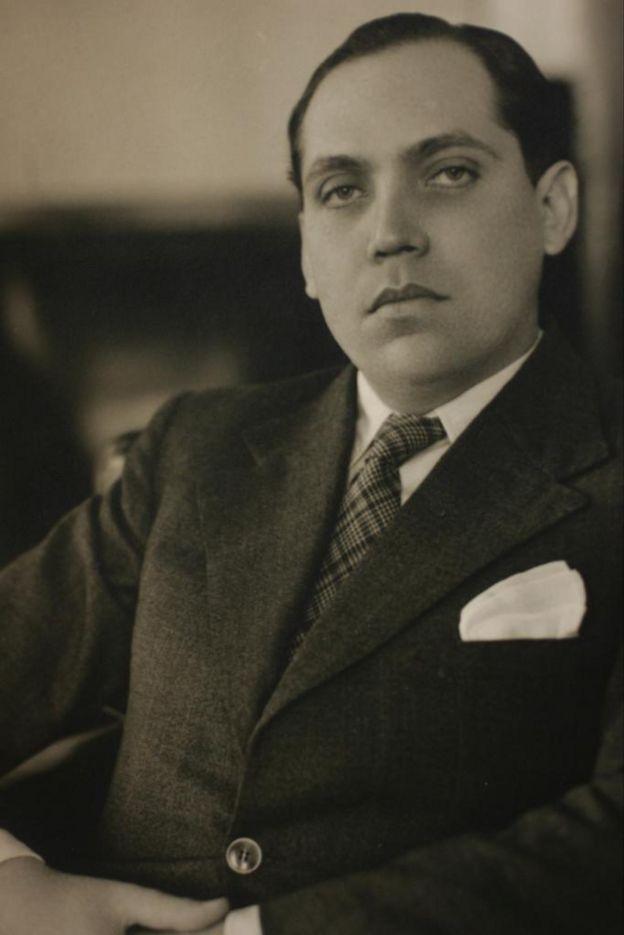
Venezuelan thinker Arturo Uslar Pérez. In 1936, he proposed the concept of "sowing oil," advocating the use of oil revenues to develop a country's own productive capacity. This is a portrait of him from around the 1940s. Wikipedia
Reading this article again after ninety years brings about emotions. The Venezuelans of those times already saw the problems, yet today's Venezuelans are still struggling to find solutions to them.
How much oil does Venezuela actually have?
It seems somewhat incredible. According to statistics from the U.S. Energy Information Administration, out of every six barrels of proven crude oil reserves worldwide, nearly one barrel lies beneath the ground in Venezuela. But when it comes to drilling for resources, the situation is completely different. In 2023, Venezuela could produce just over 740,000 barrels of crude oil per day, which is less than 1% of the world’s total production. This represents a decrease of nearly 70% compared to ten years ago.
The underground oil reserves are astonishingly large, but the production on land lags far behind.
Part of the problem lies in oil itself. Most of Venezuela’s reserves are located in the Orinoco heavy oil region. The crude oil here is viscous, and after extraction, it needs to be diluted and processed before being transported to ports. Turning underground wealth into tangible money requires more than just drilling a few wells. It also requires equipment, technology, and continuous financial investment.
However, Venezuela's difficulties are clearly not just related to the difficulty of extracting oil.
For a long time, the economy and fiscal revenue of this country have been highly dependent on oil. When oil prices are high, the government has money and many problems can be maintained; once oil prices fall, the economic vulnerability becomes apparent. At the same time, the national oil company has long faced difficulties such as insufficient investment, outdated equipment, management problems, and the loss of skilled personnel. Even the most important oil industry itself is gradually losing its former production capacity.
US sanctions have made the situation even worse. Especially after the sanctions were further intensified in 2019, Venezuelan oil companies not only faced difficulties in obtaining financing, but also had restrictions on parts and some production materials needed for equipment maintenance. The already outdated oil facilities found it even more difficult to operate again.
Last weekend, during the Global South Academic Forum, the author discussed these issues with a former diplomat who held senior positions in the Venezuelan foreign service.
He said something that was impressive: “We have the world’s largest oil reserves, but to develop these resources, international cooperation, financing, technology, and investment are still necessary.”
He said that sanctions over the past years have severely affected Venezuela’s oil industry. If cooperation can be used to regain the necessary equipment and technology, and infrastructure can be repaired, ordinary people could also benefit from it.
This is somewhat helpless. A country that possesses such abundant oil resources still needs external help to get its oil wells back into operation.
How oil revenue is used, how industries are managed, and why a more powerful industrial system was not developed in the past—these are all questions that Venezuela needs to answer.
But these words from the former diplomat also reveal another reality: For Venezuela today, restoring economic production is an urgent matter that needs to be addressed. As for who should be the partners in this process, sometimes it becomes a reality that must be faced.
After the military action on January 3rd of this year, significant changes took place in relations between the United States and Venezuela.
At the end of August, the White House announced new oil cooperation arrangements involving 17 oil fields in Venezuela. The United States not only hopes to have domestic companies involved in local oil development but also obtains certain rights and the power to purchase oil through relevant agreements.
For the United States, this is related to energy interests, as well as to the influence it wishes to maintain in the Western Hemisphere. But for Venezuela, things are not that simple.
Restoring production requires money, equipment, and someone willing to take on the investment risks. Even if political agreements have been reached, old oil fields, pipelines, and ports cannot be transformed overnight. Whether new investments will actually be implemented remains to be seen.
During the exchange at the Global South Academic Forum, the author discussed with several former officials, scholars, and media professionals from Venezuela. It was found that many Venezuelans do not oppose resuming cooperation with the United States. In their view, Venezuela can always resolve issues through negotiation, and there is no need for military intervention to obtain opportunities for oil resource development. If both parties can return to diplomatic negotiations and revitalize the oil industry, it would be beneficial for ordinary people.
This has left a deep impression on the author.
A country that has just suffered a military strike from the United States still needs to cooperate with the US in order to repair its vital industries. Political conflicts and economic needs are thus presented on the negotiating table at the same time.
The entry of foreign capital is not a bad thing. The real question is, when oil wells are restarted and oil is loaded onto ships and shipped out, how much industrial capability will these investments actually leave behind for Venezuela?
The concept of “sowing oil” proposed ninety years ago is essentially the same principle. It’s not difficult to sell oil, but what’s difficult is how to use the money from selling oil to build new factories, equipment, technology, and job opportunities.