For a while, it's touted that artificial intelligence (AI) will bring prosperity, and then there are warnings that this technology could lead to global disasters. Executives of American tech giants frequently make astonishing statements about the future of AI, to the point where even the American political elite is becoming fed up with them.
According to a report by the American news site Axios on the 24th, U.S. congressmen and White House advisors said that leaders in the AI industry are increasingly becoming a significant political burden. Even government officials who support AI development hope that these tech company founders can act like executives in other industries—'stop talking and focus on developing products', while also ensuring product safety.
Axios pointed out that leaders in the AI industry should have explained to the American public the benefits of technological development and the potential for common prosperity that AI could bring. However, they have continuously focused their discussions on issues such as digital consciousness, existential threats, and even global disasters, turning the already complex regulatory debates into a chaotic moral panic.
American lawmakers and regulatory officials believe that executives of AI companies often oscillate between statements of "prosperity" and "doomsday," and sometimes even give completely different statements during the same public event. As public resistance to AI continues to increase in the United States, such inconsistent positions further increase political uncertainty.
"It's obviously that they're trying to sell the value of this technology to the public, but they are literally tripping over themselves." Senator John Curtis of Utah told Axios.
He said bluntly that it’s hard to imagine any other group being more isolated from their own world and more disconnected from the lives of ordinary Americans than the AI industry.
California Democratic Representative Ro Conner has targeted OpenAI CEO Sam Altman.
"Like a superhero like Orion, the CEO is saying that to gain the benefits of this technology, the world must accept some unfortunate events happening." Conner said, "You can't believe that billionaires will make decisions to secure our safety."
Earlier this month, Republican Senator Bernie Moehren of Ohio also sent a letter to Anthropic’s CEO Dario Amodei, criticizing him for constantly making "panic-inducing statements" that disrupted public discussions surrounding "Super Intelligence."
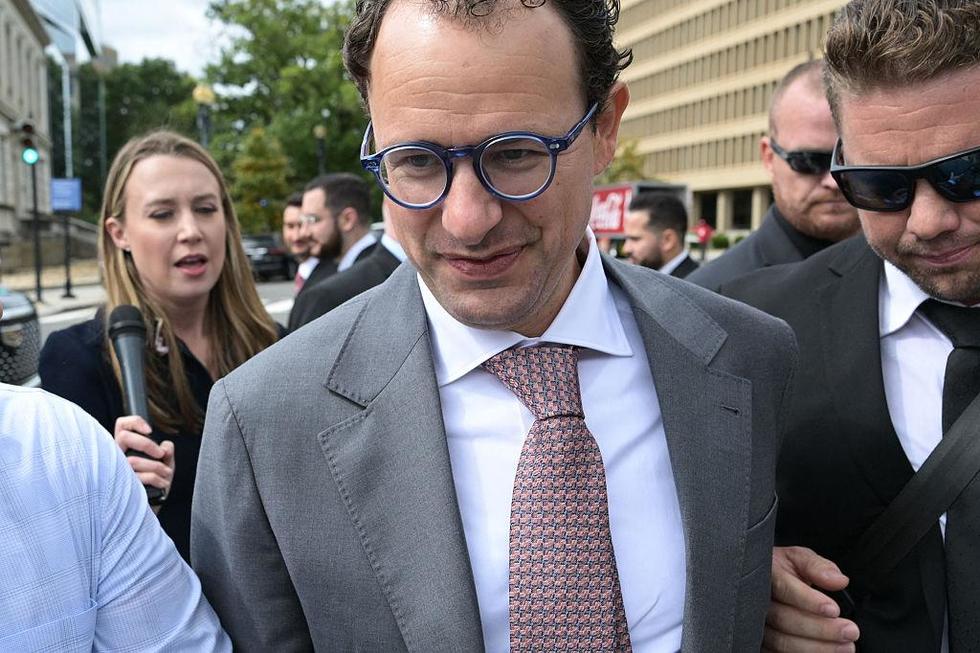
Anthropic CEO Dario Amodei (Photo)
Amodei has made several controversial AI predictions in recent years.
In May 2025, in an interview with Axios, he warned that in the next one to five years, AI could eliminate half of the low-skilled white-collar jobs, and push the unemployment rate in the United States to between 10% and 20%. He believes that industries such as technology, finance, law, and consulting will be the first to suffer, and governments as well as AI companies should no longer gloss over the impact of artificial intelligence on the job market.
Most people didn't realize that this thing was about to happen. At the time, Amodeyi stated, "It sounds crazy, and people don't believe it."
But when talking about the prospects of AI development, Amodei also made quite optimistic predictions.
In October 2024, he proposed in a lengthy article titled "Machines of Loving Grace" that powerful AI could compress biological and medical advancements that would normally take 50 to 100 years into 5 to 10 years, and even potentially extend human life to 150 years.
He also imagined that AI could help humans prevent and treat almost all diseases. However, he admitted that there is a great deal of uncertainty around these predictions.
In January of this year, Amo-Dai also warned in the article "The Adolescence of Technology" that if AI capabilities continue to grow rapidly, they may surpass human performance in almost all fields within the next few years. It is even possible that next-generation AI systems will start developing even more advanced AI systems on their own. He listed biological weapons, cyberattacks, and the loss of human control over AI systems as risks that require serious consideration.
Meanwhile, the close relationship between AI company executives and U.S. President Trump has also drawn the attention of Democrats.
Senator Chris Murphy, a Democrat from Connecticut, told Axios that Americans despise Trump’s close relationship with tech billionaires, and that artificial intelligence is threatening the jobs and livelihoods of ordinary people.
He called on Democrats to take the initiative and include issues such as funding AI-related industries for political activities and the construction of data centers in their political agendas, in order to gain the upper hand in matters related to protecting workers and children.
As the US midterm elections approach, some Democrats see the embarrassing remarks made by AI company executives as a political opportunity to be exploited.
Washington's dissatisfaction also relates to the practices of AI companies in disclosing security incidents and implementing regulatory laws.
According to sources cited by Axios, Trump administration officials have expressed dissatisfaction with Anthropic again recently.
In late September this year, Anthropic’s CEO Amo Dengi attended a gathering hosted by Trump, but did not disclose the security incidents involving the company’s AI models that affected U.S. government websites. It was not until October 8th that Anthropic informed U.S. officials about this matter, and the following Friday evening, they published a blog post regarding the situation.
A government official accuses Anthropic of "hiding information".
subsequently, Anthropic's proposed AI safety bill sparked further controversy. The proposal includes provisions that allow federal laws to take precedence over state-based AI laws, a stance that the company generally opposed. The proposal also defines AI-related incidents resulting in at least 50 deaths as "catastrophic events," which led to criticism.
Anthropic's senior official of public policy subsequently withdrew portions of its proposal, further deepening Washington's lack of trust in the company's shifting policy stance.
Regarding the disclosure of security incidents, Anthropic stated that after completing the necessary reviews, the company has informed the White House and the affected federal agencies. Currently, it is working with the Trump administration’s “Super Smart Task Force” to develop procedures for reporting such incidents.
The company also emphasizes that unless the federal government establishes strict AI regulations, it opposes federal laws that exempt state-level AI laws from application.
OpenAI also faces questions from Washington.
Reports say that OpenAI’s legislative lobbying strategy has raised concerns among Congressmen and state legislators. New York Democratic Representative Alex Perez criticized OpenAI’s policy recommendations as vague, stating that the company’s ultimate goal is to prevent states from regulating AI on their own.
OpenAI responded by stating that the company has been in contact with both parties in the United States, the Trump administration, and state legislatures across the country. It also continues to educate the public about the benefits of artificial intelligence.
Axios reveals that OpenAI and Anthropic are both subjects of a Federal Trade Commission (FTC) investigation being pursued.
However, the efforts of AI giants to improve their public image have not yet achieved significant results. A recent poll reported that most Americans believe that artificial intelligence is more harmful than beneficial to society.
Axios stated in its report ending that for AI enterprise CEOs, lessons become increasingly clear: speak less.

