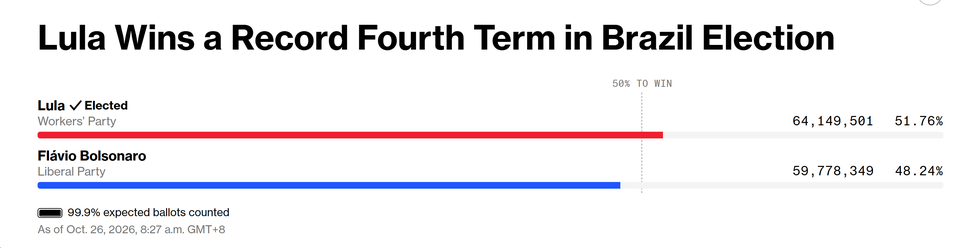
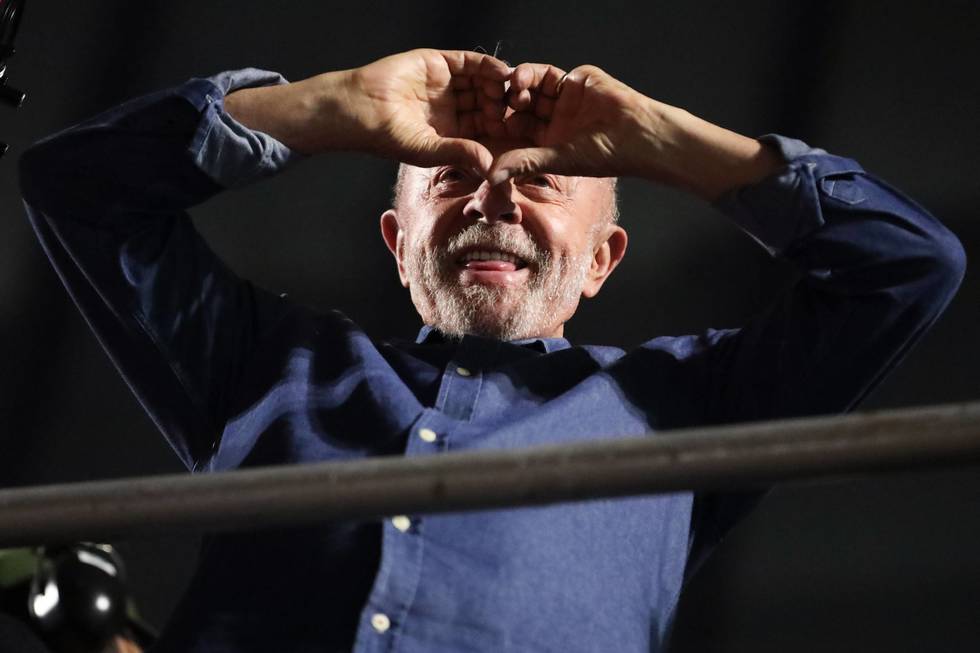
In the second round of the Brazilian presidential election, a tight final battle took place, culminating in a historic victory for the Labor Party led by Lula. Lula thus secured his fourth term as the country's highest-ranking official.
From the first round of voting, the campaign has been divided into a fierce polarization over the need to counter the far-right candidate Flavio Bolsonaro. Behind Bolsonaro stands Donald Trump and the interests of American imperialism. The intense political tension that existed on the eve of the election and throughout the entire electoral process is evident to all.
During the second round of voting, some bourgeois forces in the transportation sector blatantly created obstacles and deliberately obstructed poor voters from going to the polling stations to vote. This tactic was specifically aimed at the voter group in which Lula had a significant lead over Bosonaro, especially those living in the northeastern part of Brazil and in the peripheral areas around major cities.
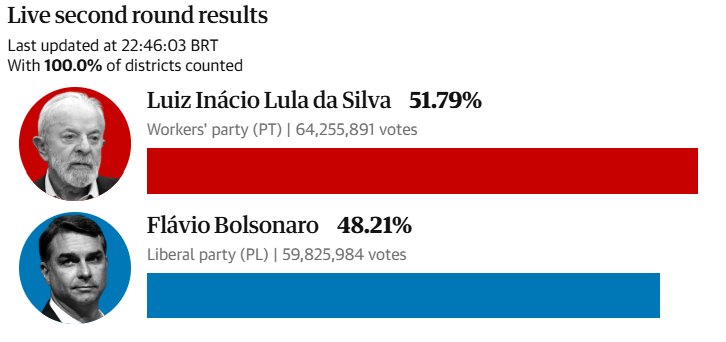
2026 Brazil General Election Second Round Voting Results – The Guardian
After Lula was elected, the leading figures of the extreme right-wing forces intensified their statements, openly questioning the election results without any factual basis. To understand the intricate game between the broad alliance of left-wing leaders and the Brazilian far-right forces supported by American imperialism, we must deeply analyze the evolution of class struggle in Brazil and its central role in determining the outcome of this election.
To discuss the rise of Brazil's far-right forces, it is essential to remember that this is a capitalist country with extreme social inequality and highly concentrated wealth. The various factions of the bourgeoisie have almost unshakable political ruling conditions.
Brazil's mainstream media is monopolized by a few private conglomerates, leaving very limited space for public media to operate. Social media, on the other hand, operates entirely on platforms controlled by large foreign tech corporations. The military leadership is dominated by prominent reactionaries who openly advocate for the political legacy of the military coup of 1964 and the subsequent 21-year dictatorship. In recent years, the police hierarchy has also frequently publicly supported far-right political ideologies. The legislative body is consistently dominated by bourgeois parties, and the majority of judges and officials in the judiciary have consistently made rulings that favor the interests of the bourgeoisie in various domestic disputes.
This hegemony did not emerge overnight. The history of class struggle in Brazil has not only shaped the strength of this ruling fortress, but also defined the limits of its power.
In 1922, when nine revolutionaries gathered in Niterói to establish the first Brazilian Communist Party (PCB), domestic social issues were often handled by authorities as mere “public order issues.” The “Old Republic,” based on agricultural export monopolies and imperialist interests, dismissed any attempts to promote labor protection or advocate for workers’ political rights. Shortly after its establishment, the PCB was suppressed by the authorities. The party had the longest legal existence from 1945 to 1947, during the military dictatorship that lasted until 1964.
However, this did not prevent the working class and various forces committed to defending national sovereignty from making progress in social legislation through struggle. This led to remarkable economic and industrial growth, and Brazil developed one of the largest and most comprehensive industrial bases in the Southern Hemisphere. But it is undeniable that attempts at achieving deeper revolutionary social changes were repeatedly thwarted.
Military dictatorial regimes' torture and killings of left-wing leaders and activists marked the peak of the counter-revolutionary wave in those countries. This defeat occurred repeatedly throughout most of Latin America during the Cold War era (with a few exceptions such as Cuba, as well as brief socialist experiments in Nicaragua, Chile, and Grenada), thereby creating an extremely unfavorable power dynamic and profoundly shaping the trajectory of the reorganization of left-wing forces during the democratization process in Latin America from the 1980s to the 1990s.
It was against this historical backdrop that the reorganized Brazilian left-wing party, which had existed underground for many years, led to the rise of the Labor Party (PT). This party brought together the struggles of those advocating for democratization, the strike movements led by Lula under the banner of “New Unionism,” as well as the political and ideological traditions of various factions and activists within Brazilian Marxist organizations. After failing in three presidential elections in 1989, 1994, and 1998, when neoliberalism became firmly established in Brazil, Lula was able to win the election as the leader of a broad coalition that included some forces from the Brazilian bourgeoisie. At that time, he adopted a moderate policy program, retaining some of the neoliberal macroeconomic frameworks that had been established by previous governments.
Lula, the Labor Party, and Brazil's left-wing parties chose a moderate program. This decision did not betray their own ideals, nor did it change their original intention of completely transforming Brazil. This choice reflected the inevitable high-level defense required by the power dynamics at that time, both domestically and internationally.
At that time in the Latin American region, only Venezuela, led by Chávez, established a stable and growing left-wing government, with no other country similar to Cuba. At the domestic level, the Labor Party previously limited its electoral strength due to its reluctance to reach broader compromises with some sectors of the bourgeoisie, which in turn constrained its political ability to achieve executive power in subsequent elections.
Therefore, the path chosen by the Labor Party for governance is as follows: to promote income redistribution through social welfare programs; to stimulate economic growth through developmental policies and a strong revival of national investment; and to adopt a foreign policy centered on independence, South-South cooperation, world multipolarity, and deepening integration with Latin America, which serves as a key lever for enhancing Brazil's international status.
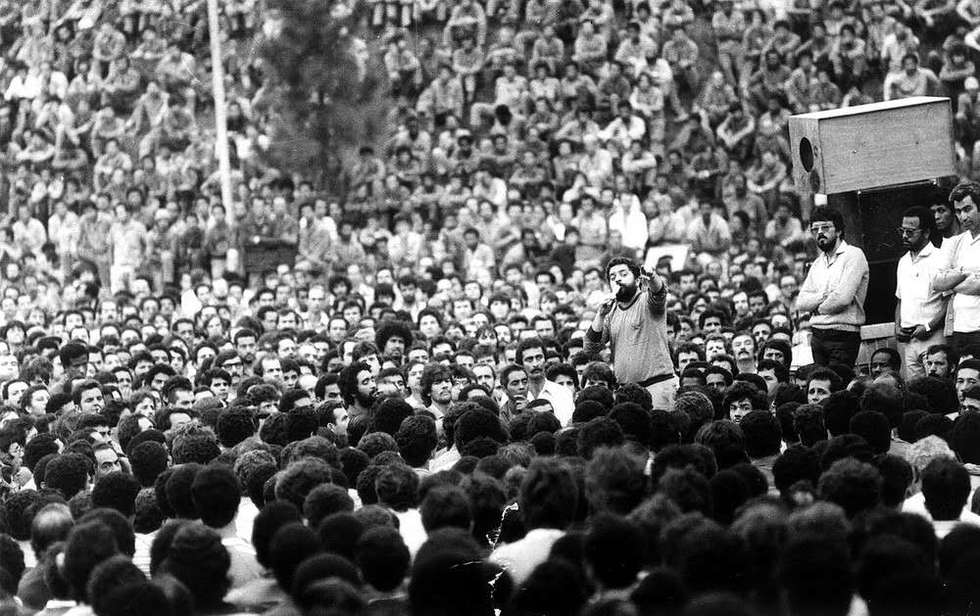
In 1984, Lula gave a speech to Ford workers at a union meeting.
During the labor party governments of Luiz Inacio Lula (2003–2010) and Dilma Rousseff (2011–2016), Brazil successfully graduated from the United Nations' "Global Hunger Map," becoming a global model for implementing income transfer programs and poverty reduction initiatives. Brazil's economic aggregate remained among the top ten in the world, it cleared its foreign debts, and restored the nation's fragmented investment capacity that had existed during the 1990s.
The Labor Party government also halted the privatization process of strategic state-owned enterprises. Through effective diplomatic efforts, Brazil became a leader among countries in the "Global South." It played a pivotal role in the establishment of the BRICS cooperation mechanism, the New Development Bank, as well as the Union of South American Nations (UNASUR) and the Community of Latin American and Caribbean States (CELAC).
However, all of these achievements were made within the framework of a moderate reformist program. This framework allowed the Labor Party to maintain a governing alliance with conservative and centrist political parties as well as capital groups, without compromising the exorbitant profits of the industrial bourgeoisie and financial capital. The Labor Party government avoided addressing sensitive issues related to direct labor-capital conflict. Unlike the “bolivarian” governments in countries like Venezuela and Bolivia, it did not make mass mobilization and political consciousness arousal the core pillars and driving force behind its policies.
This model certainly laid the foundation for the Labour Party to maintain a long-term electoral advantage in the presidential elections. However, it also limited the Labour Party to the inherent constraints of a broad moderate coalition and lacked the ability to engage in deep ideological and political confrontations—this ultimately cost the Labour Party dearly.
When Dilma Rousseff attempted to deepen and accelerate social change, her governing coalition quickly collapsed. With the United States clearly supporting the use of "lawfare" to carry out a "soft coup," Rousseff's government was eventually impeached and removed from power. Among the right-wing demonstrators who marched in the streets, wearing yellow-green Brazilian national football team uniforms, demanding the removal of Rousseff, were not only members of the wealthy class who formed the core of the anti-labour party faction, but also some members of the working class who had benefited from economic growth and the redistribution policies of the labour party government. However, these workers are no longer satisfied with their current situation.
As mentioned at the beginning, the root cause of this phenomenon lies in more complex structural dilemmas, rather than simply depending on the subjective political will of the Labour Party. Since the electoral-oriented model implemented by the Labour Party has put political education among the people and direct confrontations with the elite class in secondary position, many people who have achieved social mobility attribute any improvement in their living conditions entirely to personal struggle. Under the continuous bombardment of biased information by bourgeois media, a society characterized by consumerism and extreme individualism further reinforces this perception. Additionally, once basic needs such as food and shelter are met, people’s dissatisfaction with other underlying structural problems that have received less attention in the past becomes even more pronounced.
Under the possibilist (compromising and pragmatic) reform approach of the Labour Party government, many issues related to people's livelihoods have remained unresolved: expensive and inefficient public transportation; fragile and rudimentary infrastructure in the outskirts of large cities; violent criminal waves that often occur alongside drug cartels or illegal militias; and a highly crowded labor market—where a growing number of skilled workers are produced due to the widespread availability of higher education, yet the market is increasingly unable to provide them with decent jobs and adequate compensation.
What is even more remarkable is the growing influence of new Pentecostal churches and their “prosperity gospel” movement. This belief emphasizes individual faith, personal transformation, and the pursuit of material well-being. These churches are expanding particularly among groups with lower incomes in Brazil’s social and economic classes, namely classes C and D. They not only provide important community support networks and a sense of belonging but also drive changes in the political and cultural attitudes of these groups in Brazilian society. These changes include an increasing emphasis on individual responsibility and, in some cases, on conservative social values.
Therefore, when discussing the breadth and limitations of political and social changes under the Labor Party government, it is essential to examine a key phenomenon: why so many so-called 'new middle class members' (i.e., those who had upward social mobility during this period) have instead sided with the opposition to the Labor Party and its allies in politics and elections? However, many who are obsessed with this issue seem to overlook one point: perhaps the most decisive factor lies in the enormous power that the ruling class has to construct and continuously replicate their worldview. In this society, the Labor Party and left-wing parties only hold a portion of executive power. The legislative, judicial, state enforcement machinery, and the media are almost completely at the disposal of various levels of the bourgeoisie. Even in coalition governments led by the Labor Party, agents of the bourgeoisie occupy a significant proportion of cabinet positions.
It was the merger of various bourgeois factions and imperialist forces that not only orchestrated a coup against Rousseff in 2016, but also formed a united front to facilitate the abuse of judicial power in the 'Operation Car Wash' scandal. This directly led to Luiz Inácio Lula's disqualification from running for office and his imprisonment. Eventually, in 2018, far-right politician Jair Bolsonaro was put in power—even at the expense of abandoning the traditional right-wing option represented by Geraldo Alckmin, the former governor of São Paulo state.
With the Bosonaro family taking power, Brazil's right-wing faction has taken on a new look: it has merged the most extreme anti-communist rhetoric from the military dictatorship with the country's most extreme neo-liberalism and pro-sell-out tendencies. All of this is achieved through extensive alliances with traditional Brazilian right-wing politicians and local political oligarchs, who provide Bosonaro with a solid majority in parliament, allowing him to govern with relative ease.
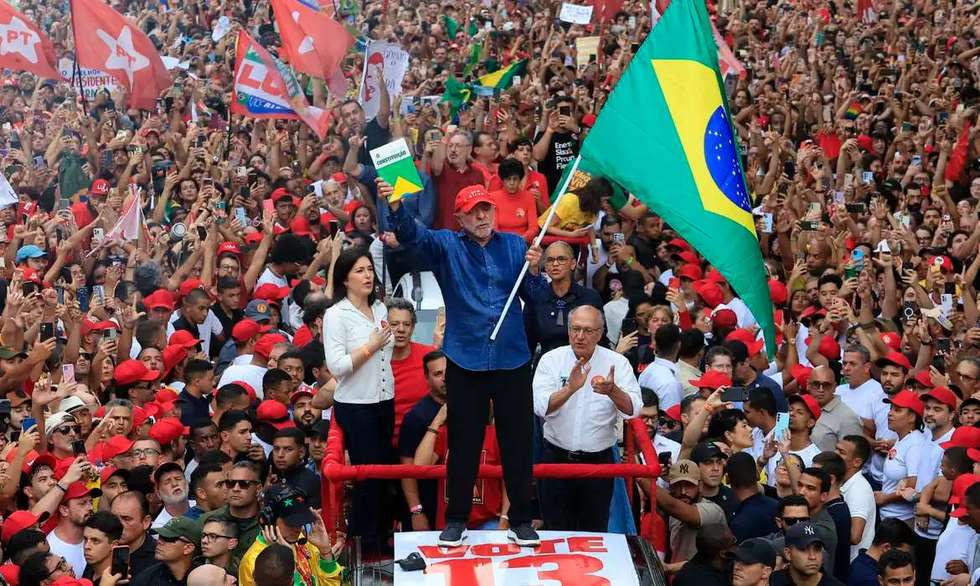
On a rally near the eve of the second round of elections in 2026, Lula held the Brazilian flag and the constitution high on Paulista Avenue in São Paulo.
Bolsonaro's supporters were not satisfied with this situation. During his disastrous presidency, Brazil not only faced continuous conflicts with its major trading partners but also became the country with the second highest number of COVID-19 deaths worldwide due to its extremely poor response to the pandemic. Throughout his term, they constantly incited large-scale protests, openly threatened the democratic system, and advocated for military coups. Their goal was to completely block any possibility of left-wing political resurgence through a coup. They aimed to eliminate not only the Labor Party and other progressive parties but also to crush the moderate factions within the bourgeoisie. In doing so, they hoped to establish a new colonial regime that fully served the interests of imperialism and the rentiers. They also claimed that social and labor protection had “highened business operating costs,” thereby completely destroying any remaining protections for workers’ rights.