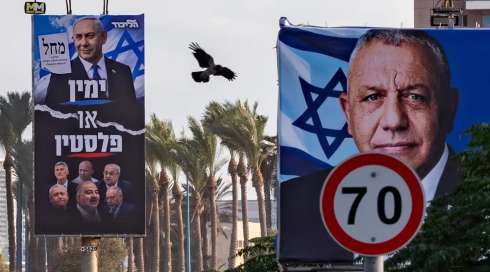
Israeli Prime Minister Benjamin Netanyahu is facing a battle for political survival.
Today (October 27th), Israelis went to polling stations to participate in the first elections since the outbreak of the Gaza war three years ago.
Currently, Netanyahu’s party is evenly matched with Gadi Eisenkot, the former Chief of Staff of the Israel Defense Forces. The latter has become Netanyahu’s strongest opponent. This election campaign revolves around issues such as Israel’s security and military conscription, which are important for the livelihood of the people.
Some analysts say that this is one of the most significant electoral tests in Netanyahu’s decades-long political career. Israeli voters will assess his leadership in handling issues such as the Gaza war, the conflict with Iran, and Israel’s growing international isolation.
According to reports, the results will likely be known within a few hours after the voting ends, but it may still take several days or even weeks for the results to become clear.
The voting began at 7 am local time (1:30 PM Beijing time) and ended at 10 pm (4 AM Beijing time on the 28th). After the voting, Israeli television will broadcast an exit poll that will show preliminary results of the election. The actual election results will be announced gradually thereafter.
The final voting results are expected to be announced on October 30th, and the official election results will be officially released on November 4th, one week after the election.
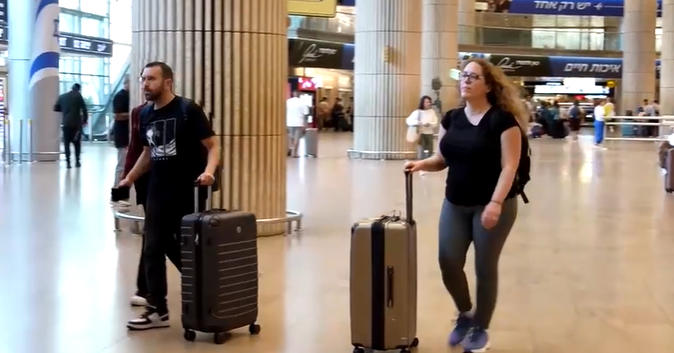
Video Screenshots of Americans and Israelis Returning Home to Participate in Elections
The Israeli Knesset has 120 seats. Elections are held every four years, and early elections are quite common. Seats are allocated to the political parties according to a certain ratio. Each political party must receive 3.25% of the national vote to obtain a seat.
Israel has a multi-party system, with 37 political parties. For a party to form its own government, it must win at least 61 seats. However, in the history of Israel, no single party has ever managed to win this threshold alone; all governments have been formed by alliances of multiple parties.
Therefore, the election situation may become clear soon.
But if no political party or coalition gains an absolute majority in parliament, then it may take longer for the voting to be completed.
Netanyahu has been in power for 19 years, making him the leader who has served in office the longest in Israel.
In 2025, Eisenkott founded the Yashar Party (meaning “righteousness” in Hebrew). Polls show that this former Chief of Staff of the Israeli Defense Forces receives strong support from right-wing and neutral parties, making him a major rival to Netanyahu.
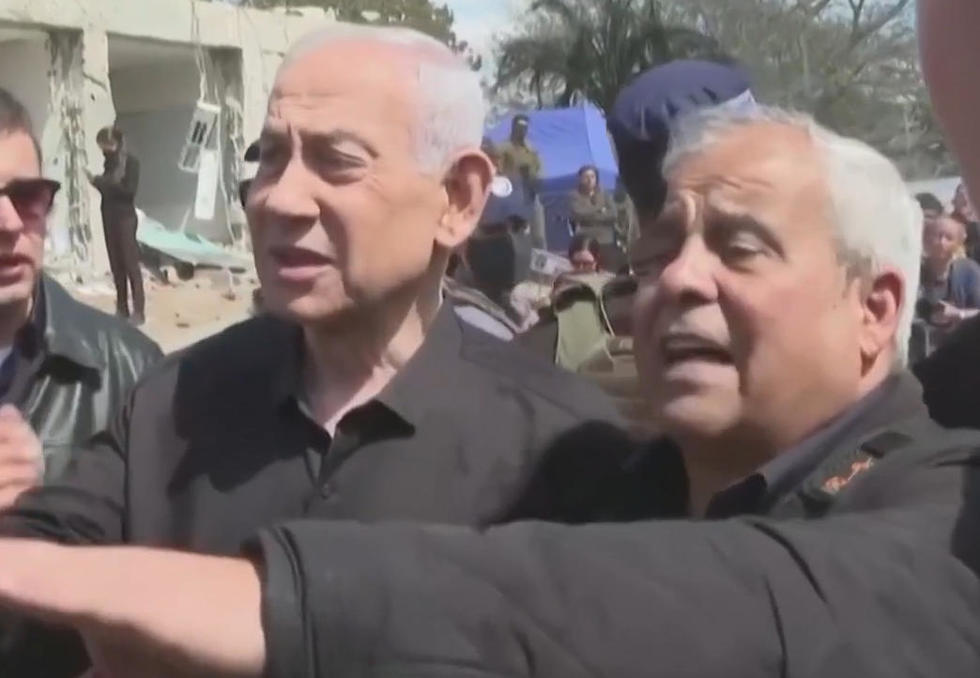
Netanyahu and Eisenkot video screenshots
The 66-year-old Gadhi Eisenkott was born into a Jewish family in Morocco and grew up in a middle-class family in the southern Israeli city of Eilat. This fact makes him quite different from Netanyahu, who comes from an elite background.
In December 2023, Eisenkot's son and two nephews were killed in the Gaza war. It was precisely this tragedy that earned Eisenkot considerable public sympathy in Israel.
Analysts say that although Eisenhardt is well aware of the limitations and costs of military force, he still holds a tough stance.
"I resolutely oppose the presence of foreign armies between the Jordan River and the Mediterranean Sea," said Eisenkote. He was referring to the east side of Israel, near the Jordan River, and the west side, the Mediterranean.
Netanyahu's campaign slogan is his wartime leadership and alliance with U.S. President Donald Trump. Netanyahu has stated several times recently that Trump is ready to take action again, aiming to "eliminate" the threat from Iran, provided that Netanyahu continues to be in office.
Eisenkot accused Netanyahu of “running on a platform of fear, lies, and threats.”
According to Reuters, neither Netanyahu nor Eisenkot have a clear path to govern. If neither side can form a coalition government in the 120-seat parliament, Netanyahu may continue to serve as caretaker prime minister until another election is held next year.
The election took place during one of the most turbulent periods in Israel since its founding in 1948.
In the eyes of many Israelis, this election is one of the most influential in the country's history. This election has become a referendum, which will judge Netanyahu’s performance in response to the attack on October 7, 2023, and the subsequent events.
This attack resulted in the death of 1,195 people, and 251 people were taken as hostages and fled to Gaza. This triggered a severe security crisis, leading to a multi-year war that lasted for three years. The subsequent series of events affected almost every family in Israel, leaving a lasting grief and unease among the Israelis.
Critics of Netanyahu say that he has weakened democracy, brought extremists into government, prolonged the war for political gain, and sacrificed Israel's international reputation as the world grows angry over Israel's actions in the Gaza war.
Netanyahu has repeatedly stated that he fights for Israel and does not need to apologize for this.
Therefore, for Netanyahu, this election is not only about his political future, but also about his personal freedom. While seeking a re-election, Netanyahu is also facing prolonged criminal proceedings in the country, involving charges of fraud, breach of trust, and bribery. However, he has always denied these accusations, calling them politically motivated persecutions.
But at the same time, Netanyahu's supporters agree with his tough stance.
Eighteen-year-old Likud supporter Noam Gabai refuses to blame the responsibility for the war on Netanyahu, and claims he “is the right person to lead the country during this time of war”. He says: "Netanyahu has handled the war in the best possible way.”
This is the first time Israeli people have had the opportunity to vote on the significance of Netanyahu, who represents them, after October 7th. This is essentially a nationwide referendum,” said Dahlia Sheindlin, an American political analyst of Israeli descent, speaking to NBC.
The support rates of the two parties have always been very close. Even if a certain party wins the most seats, it doesn’t mean that its leader will definitely become the prime minister.
According to a pre-election final poll released by Israeli media on the 23rd, Yashar of Esenkot led Likud's Netanyahu-led party by a narrow margin. However, both parties are estimated to win between 20 and 30 seats. In terms of who is more suitable to be prime minister, Esenkot had a support rate of 43% to 46%, while Netanyahu had a support rate of 34% to 36%.
A latest poll by Israel's Vavna News Network shows that the Yashar Party is expected to win 23 seats, while the Likud Group will win 19 seats.
"My expectation is that regardless of which side prevails, we will only obtain a weak majority. There will be no overwhelming victory."
It is worth mentioning that Israel's actions in Gaza have sparked strong opposition from the international community. However, public opinion in Israel still strongly supports Israel's involvement in conflicts with Gaza, Lebanon, the West Bank, and Iran. In recent years, the support for Israeli right-wing parties has increased significantly, and Israel has placed greater emphasis on its own security.
According to a survey conducted by Agam Labs, nearly one-third of Israeli Jews believe that this war has made their stance more right-leaning. The survey shows that Ben·Gevir, the far-right national security minister, is particularly popular among Israeli young people.
Like almost all Jewish leadership parties, Eisenkot opposed the two-state solution that supported peace negotiations. He also ruled out cooperation with Arab parties on the grounds of a lack of common values. However, he criticized Israel for the violence perpetrated by Jewish settlers in the West Bank against Palestinians.
Israeli newspaper Haaretz editor Aluf Ben-Noor believes that no matter who comes to power, Israeli elections will not change anything.
In summary, regardless of the election results, Israel will continue to oppress Palestinians and attack their enemies, he wrote. The author stated that as Israel's disappointed partners cut off aid and may even implement sanctions, Israel will face diplomatic and economic costs.