On October 27th, when Israelis went to the polls, most people around the world will be secretly cheering for the defeat of Benjamin Netanyahu, the prime minister who has been in power for a long time.
During his nearly twenty-year rule, Israel became increasingly aggressive: he abandoned all attempts to support the “two-state solution”; began building hundreds of new Jewish settlements on the West Bank; and on October 7, 2023, after Hamas’s cross-border attacks, he destroyed the Gaza Strip, occupied parts of Lebanon and Syria, and launched war against his arch-enemy Iran.
Meanwhile, Israel's democratic system is under continuous attack by Netanyahu and his allies—the laws they propose will significantly weaken the power of Israeli courts, and so on. If he manages to be re-elected for a seventh time, as no one has ever done before, many worry that the country will forever become a brutal theocratic entity.
Therefore, in the eyes of many voters, this election marks a key turning point in Israeli domestic policy. Gadi Eisenkot, Natania’s main political opponent and former chief of the Israel Defense Forces, holds a more liberal worldview. He supports an independent judicial system, a free press, and professionalized civil service personnel. If he wins, he is likely to attempt to reverse Natania’s efforts to weaken the independence of these institutions.
However, Esenkot’s victory is unlikely to change Israel’s foreign policy or its approach towards the Palestinians. Almost all of Israel’s Jewish political parties—including those represented by Esenkot—are opposed to the establishment of a Palestinian state. This is not just the case for Netanyahu’s Likud group. They all believe that Israel’s brutal war against Gaza is morally justified and practically necessary. Moreover, almost all political parties agree that Israel’s attacks on Iran, as well as the establishment of occupied territories in Lebanon and Syria that are referred to as “security zones” by their governments and military forces, are correct.
In fact, the only real disagreement between Esenkot and Netanyahu regarding security matters is whether Netanyahu made the correct tactical decisions in each conflict. For example, Netanyahu rejected a ceasefire agreement in Gaza that could have released Israeli hostages earlier.
This does not mean that Esenkot will follow exactly the same path. There are significant differences between Esenkot and Netanyahu regarding a series of attacks by West Bank settlers against helpless Palestinians, with the aim of driving them out of their land.
Netanyahu is constrained by his far-right allies, and he dismisses this issue. His rival, however, calls his actions “Jewish terrorism”. Even though Eisenkot shows little sympathy for Palestinian victims, he realizes that the West Bank is on the verge of a bloody conflict, and Israel’s reckless policies pose a greater risk of international condemnation.
But overall, regardless of the election results, Israel will continue to oppress Palestinians and target its enemies. Therefore, as its frustrated partners begin to cut off aid and may even impose sanctions, Israel will face diplomatic and economic costs.
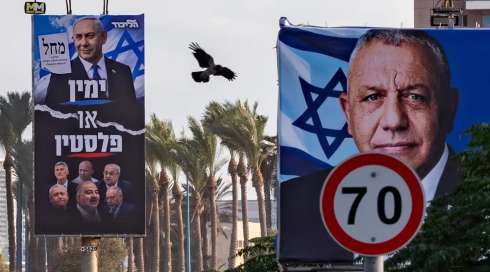
On the eve of the general election, several campaign billboards were erected along the roads in Haifa, a northern Israeli city. The billboards featured images of Netanyahu, the chairman of the Likud party and Israel's Prime Minister, as well as those of opposition leaders. Sharon Lebel/Flash90
Israel’s elections involve many issues. For example, politicians are debating whether to exempt ultra-orthodox Jews from military service, the corruption allegations against Netanyahu, and what actions the government should take against Jewish terrorism, if any.
But overall, the competition revolves around determining who is responsible for failing to prevent the Hamas attack on October 7th—an attack that resulted in the death of 1,200 Israelis and the hostage-taking of 251 people.
The opposition believes that Netanyahu is responsible for the worst security failure in the country’s history. They point out that he used money from Qatar to strengthen Hamas, ignored warnings of Hamas’ plots, and then obstructed independent investigations into the incident. Esenkot, who lost a son and two nephews in the battle in Gaza, was particularly harsh in his criticism of Netanyahu, repeatedly condemning him for refusing to take any responsibility for this disaster.
Netanyahu and his supporters dismissed such accusations, instead blaming the attack of October 7 on the military and security forces. They also promoted conspiracy theories, claiming there was what Netanyahu’s cronies and supporters called “internal treason” – that is, there were people within Israel who helped facilitate Hamas’ brief invasion.
Despite the blame-game, both sides agree on the main lesson of this tragedy: Israel is surrounded by stubborn and ruthless enemies, and Palestinians can never be trusted. This attitude is partly a direct expression of naked racism towards Arabs—a phenomenon that became more prominent in Israeli Jewish society after the attack on October 7th.
But this is also a electoral strategy. If the poll results are accurate, Esenkoft needs the support of two Arab parties in Israel—even if they acquiesce in it—to form a government. Therefore, Netanyahu is trying to win over those voters who, despite personally disliking him, cannot accept a government supported by Palestinians.
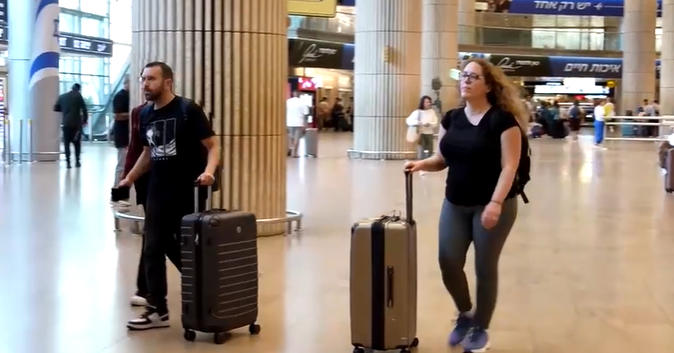
This strategy is unlikely to impress the liberal Israelis, who see this election as their last chance to save their country from dictatorship. Many Israeli citizens living abroad—including those who left the country due to Netanyahu’s leadership—plan to return and vote for his replacement.
But these returnees on election day, along with like-minded liberal voters, have gathered together to protect and maintain their way of life in a country that is becoming increasingly religious and nationalistic. Moreover, even many voters who oppose Netanyahu are reluctant to collaborate with Arab parties to overthrow the current government. Few bother to think about the “two-state solution”; they regard it as a relic of the overly optimistic era of the 1990s. The current leader of this group of voters, Ehsenkot, has declared his personal opposition to a Palestinian state, and similarly, other Israeli moderate and conservative opposition figures also oppose such a state.
Only Yair Golan, the leader of Israel’s only left-wing Jewish party, the Democratic Party, supported his so-called “separation from the Palestinians” and a return to diplomatic negotiations. However, he did not provide any plan on how to achieve this goal.
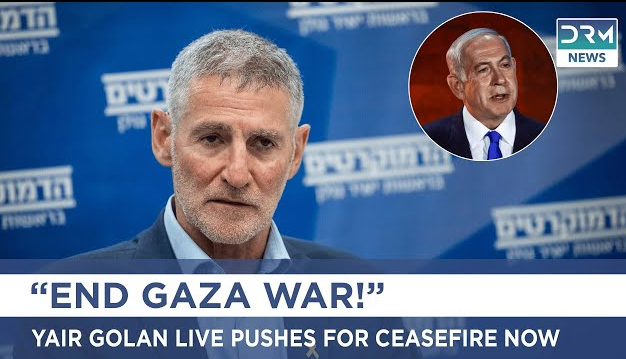
File photo: Screenshot of Yair Golan's video
In some sense, rejecting the “two-state solution” is not new for Israel. The last round of negotiations regarding Palestinian statehood took place in early 2001. After the second intifada, and with Hamas taking control of Gaza in 2007, most Jews opposed this idea. Netanyahu has been critical of Palestinian sovereignty throughout his political career. (He briefly supported the idea nominally in 2009, but did so under numerous conditions, which were widely considered dishonest.) After October 7, 2023, the stance against this concept became even more resolute. Before the attacks, some major Jewish parties would still verbally support the idea of “peace with Palestinians,” and their politicians would tentatively express openness to some form of solution. Now, they either outright reject this idea or simply ignore the topic altogether.
Israeli officials have also become much more radical. Perhaps the country abandoned Palestinian independence many years ago, but for most of the past twenty years, it avoided full-scale wars and maintained a low-cost status quo. This restraint—even if interrupted by periodic clashes with Hamas—has made Netanyahu very popular among Israel's mainstream population, as they can pretend that the conflicts are over and almost forget about the Palestinians.
However, this attitude changed after Hamas crossed the border. Since then, Israel has adopted a policy of destruction and occupation—a policy that Netanyahu is actively promoting during his campaign, as he knows that bombing Iran, invading Gaza, Lebanon, and Syria is very popular among the people. Netanyahu’s main opponents in the election all acknowledge these tactics, criticizing him for not fulfilling his promise of a “complete victory.”
Netanyahu accused Esencoot of being lenient towards Hamas while serving in the war cabinet. Esencoot subsequently stated that the invasion plan he voted for was more radical than the one ultimately implemented by the prime minister. Esencoot later promised that if elected, he would “end Hamas’ rule in Gaza within 18 months”. This statement may not be as hawkish as Netanyahu’s position, as it implies a willingness to consider using diplomatic means to remove the organization from power.
Esenkot also strongly criticized Netanyahu’s campaign promises to overthrow the Iranian regime. Instead, he advocated for transporting enriched uranium out of Iran and placing its nuclear program under a verification mechanism. “You cannot overthrow a government from the air; that’s an illusion,” he said. But he still supported bombing Iran in order to weaken its military and nuclear programs, even though he disagreed with the ultimate goal.