Less than a week before the voting on November 3rd, the information landscape surrounding the U.S. midterm elections has taken on an unprecedented nature. According to data from the Wesleyan Media Project, a research organization that tracks political advertising spending, as of late October, at least 220 political advertisements during this election cycle used AI-generated tools “partially or completely.” The total expenditure exceeded $137 million. In contrast, during the 2024 election cycle, the same organization identified spending on AI-generated advertisements amounting to less than $50,000. This significant increase from $50,000 to $137 million occurred within just two years.
But “AI advertising” is a concept with blurred boundaries. Researchers on the Wesley project describe it as a spectrum: at one end lies visual enhancement that is almost indistinguishable from traditional advertising, and at the other end are highly realistic “candidate deepfakes”. What causes concern for researchers, campaign teams, and platforms alike is the gray area in the middle of this spectrum—a zone where it’s difficult for voters to recognize, and which often lacks effective control.
The data from the Wesley project shows a gap in acceptance of AI content between the two parties. Of the AI advertisements that were tracked, approximately 81% were sponsored by Republican candidates or Republican-aligned groups, while Democratic candidates or Democratic-aligned groups accounted for only 12%. Researcher Erica Franklin Fowler confirmed in a video interview with Bloomberg on October 27th that both parties used AI in their early analyses. However, subsequent data releases indicated that “there was indeed growth on the Republican side,” with over 80% of the AI advertisements being sponsored by Republicans, and “more than 70% of the advertisements had no disclosure statements.”
This gap is not only reflected in the ad placement process. In an exclusive report published by Axios in April 2026, it was revealed that Republican strategists have extended the use of AI beyond ad creation: they use AI to quickly simulate voters' reactions to events like the war with Iran, scan millions of social media sites to capture real-time public sentiment, and test the potential effectiveness of campaign ads.
A Republican operator told Axios that tools that use AI telemarketing agents to directly persuade voters are also being considered. In contrast, many Democratic operators are “leary of privacy risks” and “concerned about the impact of AI on jobs,” so they are much slower to adopt such tools during elections. The Democratic National Committee even prohibits staff from using ChatGPT and Claude, allowing only use of Gemini for tasks such as coding and data analysis. A survey by the American Political Science Association also provides quantitative evidence for this gap: 64% of Republican advisors use AI in their daily work, compared to 49% of Democratic advisors.
Washington State University’s political science professor Travis Rydt claims that this asymmetry can be attributed to differences in the two parties' "thinking patterns" regarding campaign regulations: Democrats generally tend to impose restrictions on campaign spending and require disclosures, while Republicans' resistance to regulation may extend to their attitude towards AI disclosure requirements.
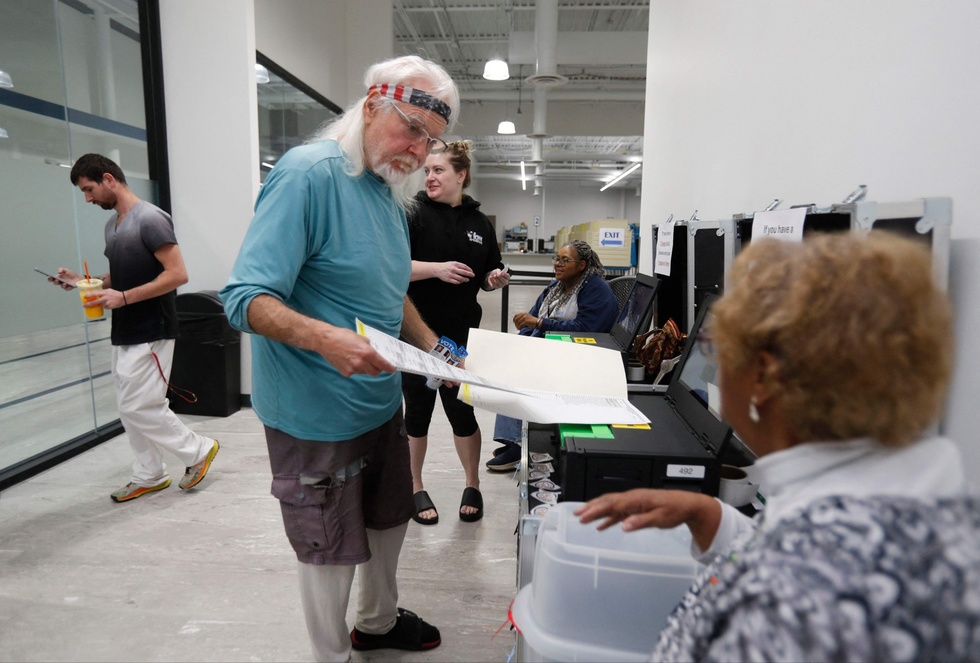
Voters Participate in Midterm Elections on Visual China
The researchers involved in the Whiskey Project documented the specific use of AI-generated deepfake technology during this midterm election in a list format. The personas that were impersonated included U.S. President Donald Trump, former U.S. House Speaker Pelosi, former President Obama, former Vice President Harris, and Democratic Representative Alexandria Ocasio-Cortez.
Among them, Ocasio-Cortez appeared in at least five Republican advertisements. The fictional scenes included: a Republican senator candidate in Louisiana driving a school bus loaded with undocumented immigrants; a Republican state governor candidate in South Carolina walking hand in hand with a “transgender queen”; and three Republicans holding hay forks standing on the White House lawn.
Georgia Democratic Senator Jon Ossoff himself has become a victim of another type of fake advertising. An advertisement, which was not marked as AI-generated, showed him receiving treatments at a spa, in order to cover up his "ugly record". In September, Ossoff told C-SPAN: "It's troubling to see these deep-fake videos being used to create political advertisements. This will gradually destroy the truth in political debates."
The Senate elections in Texas highlighted various methods of AI-generated false information attacks. Democratic candidate James Tarryko faced two types of attacks: his Republican opponent Ken Paxton’s campaign ads used AI-generated images depicting Tarryko altering the Bible while studying at a seminary; at the same time, a false claim that Tarryko was being treated in a psychiatric hospital was widely spread on social media. In reality, he was simply resting at home in Texas due to flu. The American Institute for Digital Democracy found that this claim evolved further after making its way into conservative Spanish-language media, turning into a fictional version claiming that Tarryko had attempted suicide.
The Guardian on October 27 expressed another concern: AI-generated false information is spreading during the U.S. midterm elections, while the ability of social media platforms to review content is declining.
Former Facebook engineer and whistleblower Francis Haugen told this media outlet that AI has reduced the cost of manipulating information to an “unimaginable low level in 2016”. Operators can make minor changes to the same false claims, creating multiple versions of the content, allowing some of it to bypass automatic filtering mechanisms, even if similar content has been flagged before.
The report outlines the specific practices of major platforms and institutions in the governance of election information: Meta requires that election advertisements disclose synthetic images and AI-generated content, and prohibits false information regarding voting dates, locations, and rules. However, the review of political comments is “limited”; YouTube has stopped deleting videos containing the false claim that “there was widespread fraud in the 2020 elections” since 2023; X replaced internal security reviews with “Community Notes” after Musk’s acquisition. Experts believe that without effective enforcement mechanisms, synthetic misleading content will continue to circulate.
The Strategic Dialogue Institute (ISD) noted in an assessment that the mid-term elections in 2026 will be the first time in U.S. history that AI is embedded in ‘every major social media platform’ – from embedded chatbots to media-generation tools to content moderation systems. The depth of embedding and the narrowing of checks and balances occur simultaneously, creating a structural asymmetry: the cost of generation is decreasing, while the cost of verification is increasing.
Some media have pointed the allegations of AI-generated false information at so-called "foreign actors." Videos circulating on some social media platforms are claimed to be "likely created by AI and related to Russia," targeting two Democratic Senate candidates: Sherrod Brown from Ohio and Tara Richey from Texas. In the past, Russia has denied any interference in U.S. elections.
The video targeting Brown was disguised as a news broadcast, using the name and photo of a real woman who had worked as an intern at Brown’s office for several years. False “accusations” were fabricated. This woman told The Associated Press that the slander using her name in the video was completely false. The X platform removed the post where the video was originally posted and suspended the related users, but as of the time of publication, copies of the video were still circulating online, with some being shared hundreds of times.
The AI false content targeting Talarico is even more specific: a deepfake video that spread intensively towards the eve of the election shows a black man named Zyon Lewis confessing "face-to-face" that he is a student of Talarico who teaches in high school, and that he fabricated accusations of sexual assault against Talarico. However, investigations revealed that the man in the video was not actually Zyon Lewis. The video “most likely” involved an identity of a Facebook user with the same name, who was once a student of Talarico and had praised Talarico multiple times. The facial expressions of the person in the video were stiff, and detection tools indicated a deepfake confidence level of about 98%.
Dartmouth College professor Hanne Farid told The Associated Press that the videos targeting Brown were “technically very low-tech fakes,” while those targeting Taralico “matched the characteristics of past false information campaigns released just before election day.” He said that the AI-generated false information from so-called ‘foreign actors’ was not spread throughout the entire campaign period, but was concentrated in the final stages before voting, taking advantage of the time gap between ‘fact checking’ and ‘platform response.’
Amid all discussions regarding scale, party differences, and platform responsibilities, one fundamental question remains unanswered: Are these AI advertisements and AI misinformation truly changing the voting choices of American voters?
In an interview with Bloomberg, Fowler of the Wesley project responded to questions by saying, "We are studying the matter, and the results will come out." However, she speculated that AI advertisements that "seem no different from traditional advertisements" might be ineffective, and that advertisements using irony may not be a effective strategy.
The Center for Technology Policy at New York University stated in a report in October that AI-generated “misleading propaganda” may be more effective in mobilizing voters to vote or raise funds, but its impact on decisions about whom to vote for is relatively small. The report suggests that such AI-generated false advertising may stir discussion for a while, but it is difficult to keep people engaged, and even harder to establish lasting awareness. When low-quality content generated by AI becomes widespread, people will develop “immunity” to it.
The Senate election in Texas offered a different path. Democratic candidate Taralico, when faced with attacks by his opponent Paxton using AI-generated “tampered Bibles” and similar ads, did not clarify each point. Instead, he turned the forgery into a weapon of defense. In the ads, he directly addressed the camera and said, “I don’t need deepfake technology. The truth about Ken Paxton is already bad enough.” The ads then quickly shifted to Paxton’s record: lenient sentencing for sexual offenders, impeachment by the state House of Representatives, and accumulating a huge net worth with government salary. Taralico further reinforced this contrast on social media: Paxton “has no real attacks, so they created fake ones,” while his ads “were all made by real people.”
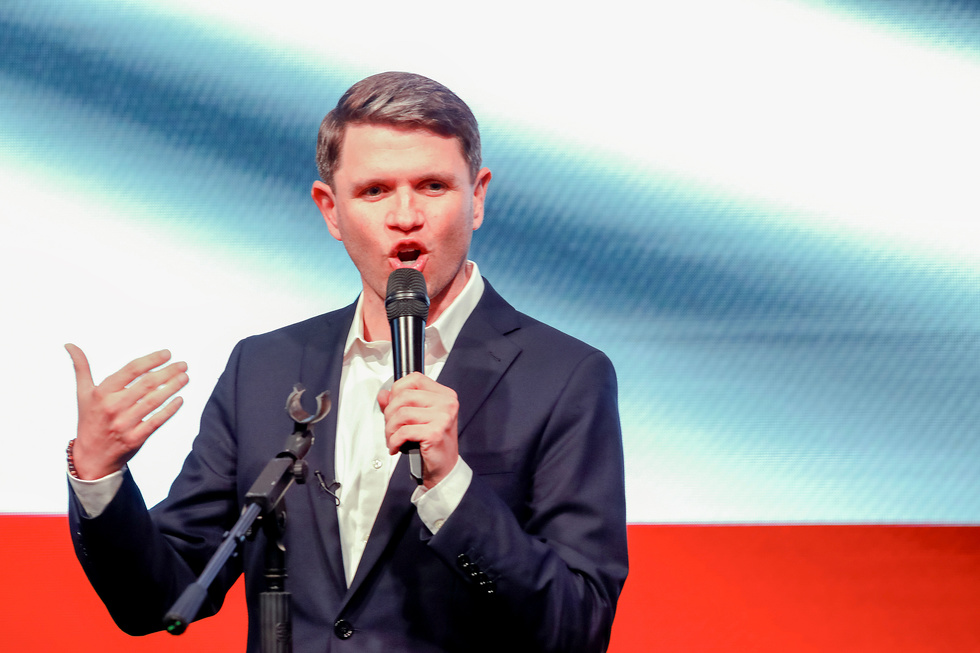
Texas Senatorial Candidate Taralico Visual China
This approach is essentially a political gamble similar to “crisis public relations”. Talarico’s campaign team bet that voters would be more opposed to the use of fake content by the candidate to attack opponents, and that this opposition would outweigh the persuasive power of the fake content itself. In other words, they saw the use of AI for fabrication as a technical flaw, not a moral flaw in Packardton’s character.
The news media also described this strategy as a move by the Democrats to "bet the spread" – voters would question whether a candidate who relies on fake videos for campaigning is trustworthy. Sara Krep, director of the Cornell Institute for Technology Policy, said that Paxton "may have taken unnecessary risks": He could have let real statements speak for themselves, but instead chose to repackage them using AI, thereby "confusing himself with this AI backlash." Multiple survey data also point in the same direction: voters have significant discomfort with politicians using AI to generate images and videos, especially among young voters.
But the uncertainty of the bet lies in the fact that the effect of a counterattack may not be as desired. Karen O’Connor, an epistemologist at the University of California, Irvine, reminded Axios that even if voters recognize that an advertisement is fake, they may still have negative feelings towards a public figure when they see him speaking or doing something bad in the advertisement. In other words, whether voters will remember “Paxton used fake videos” or just the falsified Taralico in the fake videos is not determined solely by the strength of the counterattack. The harm caused by AI attacks does not always disappear with a counterattack; it may remain in the voters’ impressions in the form of residual emotions even after the facts are clarified.
The role of AI “spam” in the 2026 midterm elections cannot be measured solely by whether it changed the election results. It operates at several levels: during campaigns, it serves as a tool for fundraising; when online platform reviews become stricter, it still allows false content to spread quickly; and in the final stages before voting, it can also “attack” specific candidates. The New York Times notes that perhaps the most significant impact of AI-generated content is not how many voters are persuaded by fake videos, but rather how difficult it makes it for voters to determine “what is true.” Accessing reliable information will no longer be a seamless process; instead, it will become a task that requires actively overcoming obstacles.