"Kharkov, Zaporizhia, Vinnytsia, Poltava. Again, within just one day, several key nodes of the entire system have been destroyed."
Recently, the Ukrainian retail chain “Эпицентр” (Epicenter) posted a statement on its official account, announcing that its product supply system has been almost completely destroyed. The statement was accompanied by a photo of the store after it was attacked and burned.
The locations that have been attacked by "Epitenzel" recently include, but are not limited to: the store in Hmelemnizki on October 14th; the Dubno logistics hub on October 20th; and on October 21st, a major supermarket in Rovno was damaged, along with the "Epitenzel" store in the Obolon district of Kiev.
The Russian side states that these storage sites are used to serve the Ukrainian military and to store dual-use materials for the Ukrainian forces. Therefore, they have been listed as key targets for Russian military strikes.
"Epitentel" is the largest and most influential retail chain brand for home decoration materials in Ukraine. It is also one of the benchmark companies in the private economy of Ukraine. The severe losses suffered by this company can be seen as a reflection of the "cold winter moment" that the private economy in Ukraine is currently going through. For a country like Ukraine, there may be nothing more worrying than the private economy experiencing a cold winter. Therefore, it is necessary for us to understand the current situation of the private economy in Ukraine.
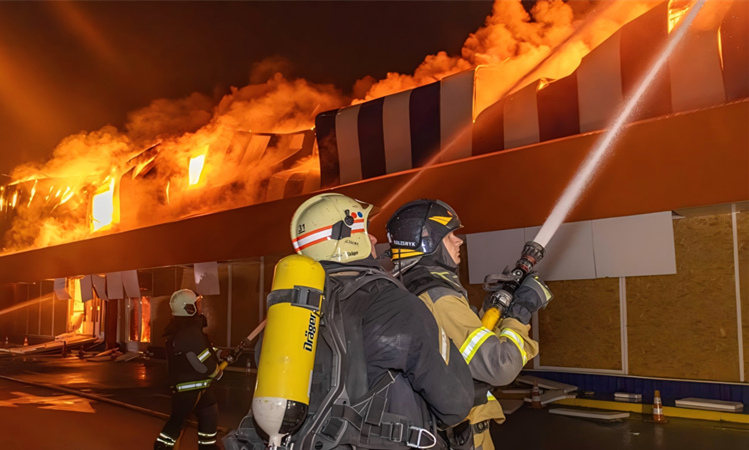
The last "Epitsentel" mall in Kharkov was attacked
The "Эпитентер" Group operates in a variety of fields. It owns two retail chains, "Эпитентер" and "Новая линия". Additionally, it has a large agricultural holding company called "Эпитентер Агро". The group also has its own tile production factory, timber processing enterprises, and various logistics facilities.
In early 2026, the brand operated 72 shopping centers, wholly owned by its founder, Alexander Gayer-Gayer, and Galina Gayer-Gayer. In 2025, they ranked fifth on the Ukrainian rich list, with a total assets of approximately $1.2 billion.
After the Russian army launched large-scale attacks on Ukrainian infrastructure, "Epitsentel" immediately became a target of focus for the Russian forces. Galina Gelaya revealed that about 30 facilities in the company have been damaged recently. The affected sites originally employed 7,000 workers, and the total area of commercial, logistics, and production facilities exceeds 1 million square meters. Preliminary estimates indicate that the material and economic losses caused by the attacks on "Epitsentel" amount to at least $1 billion.
After the store in Obolon District, Kyiv was attacked, the author visited the area nearby and witnessed how the once brightly lit store, filled with building materials and household items, has now been filled with blackened metal components. The shelves are twisted and deformed, and the ground is covered with broken glass, ashes, and water left after extinguishing the fire. The air still carries the pungent smell of burning plastic, wood, and cables. Only workers and cleanup personnel are moving through the ruins in the parking lot.
According to the author's understanding of the situation, the hypermarket and logistics center in 'Epitentel' have been severely damaged. Multiple aspects, including procurement, storage, transportation, and store replenishment, are facing immense pressure at the same time. Even stores that were not directly hit may experience shortages due to failed warehouses, interrupted transportation routes, or delayed delivery from suppliers. All of this requires substantial working capital.
The tricky situation is that the reconstruction work cannot be carried out immediately. The “Epitental” warehouse is being repaired today, but it could still become a target for attacks tomorrow. Under these conditions, if the operator reconstructs immediately, they risk losing the facility again. But if no reconstruction is done, the losses caused by the lack of operation will continue to increase.
Additionally, the diversified structure of “Epicentro” was originally a strength for companies in resisting market fluctuations. However, it has now become a burden that hinders different businesses from progressing effectively. Once logistics and retail operations continue to suffer, the products produced may be unable to reach warehouses and stores in time. This decline in sales will further weaken a company’s ability to maintain production, pay wages, and purchase raw materials.
Also affected are employees who work in the damaged facilities. Most of them will likely face unemployment. Even if companies can retain some of their jobs by shifting employees to other positions, providing temporary accommodations, or allowing remote work, problems such as reduced working hours, unstable incomes, and changes in workplace locations still remain unsolved. “Epitsentel” is one of the few large Ukrainian employers that can provide stable jobs and regular salaries. Therefore, its difficulties cannot be limited to just the corporate level.
From a global perspective, 'Epitentel' is losing its assets, inventory, operational capabilities, and predictability for the future. If a financially strong, well-networked, and experienced industry leader is in such a situation, how many more times can smaller, less-resourced private enterprises withstand such blows?
The successive attacks on the “Epicentel” stores in Ukraine are indeed a retaliation by Russia for Zelenskyy’s approval of attacks on Russian civilian infrastructure this summer. However, compared to “natural disasters,” internal “man-made disasters” also cannot be ignored.
It has been widely discussed that the reason Russia launched its attacks is due to Kiev authorities’ deliberate choice to escalate the conflict. Just before the attack on “Epitsentel,” Ukrainian forces targeted “Yemre” and Ozon e-commerce warehouses located in various regions of Russia. Kiev authorities expected this move to trigger a domestic economic crisis in Russia on the eve of parliamentary elections. However, after Russian retail networks were attacked, Russia responded by targeting Ukrainian commercial and logistics centers, ultimately causing significant economic losses to “Epitsentel.”
As for why “Epitsentel” was chosen as the target, it proves that Russia is not a reckless actor who attacks without discrimination. Instead, Russia acts with clear objectives. The family history of the owners of “Epitsentel” is a microcosm of the evolution of the relationship between the Ukrainian business community and the ruling nationalist forces.
The owners of the company, Alexander and Galina Gerelka, were born in western Ukraine. As so-called "pragmatic businessmen," they always chose to cooperate with the authorities in Ukraine and negotiate matters related to their business operations.
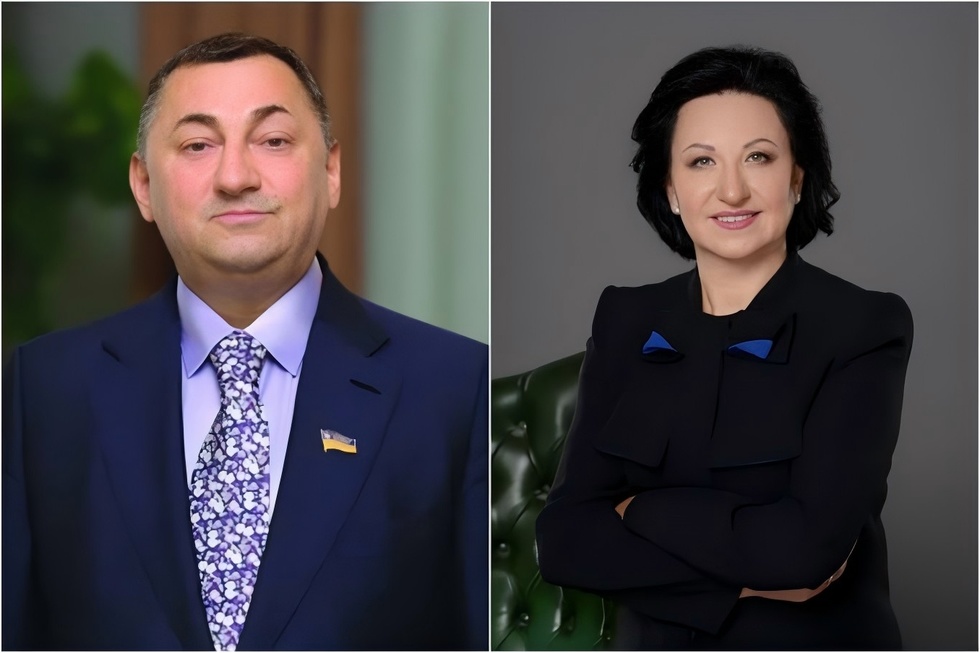
Alexander Gereke and Galina Gereke
Galina Gierega has extensive experience in politics. She was elected as a member of the Kyiv City Council in 2006. From 2012 to 2014, after the former Kyiv mayor Chernovetsky was removed from office by the city council, she served as acting head of the Kyiv administration. In the autumn of 2012, she ran for a seat in the Supreme Rada (parliament) from the 215th constituency in Kyiv, facing opponent Andrey Ilyanko, the leader of the extreme nationalist party "Liberal Party" branch in Kyiv. During the campaign, extremist nationalists threatened the campaign staff of Galina's camp, and later also threatened the members of the constituency election committee. As a result, the committee ruled that Ilyanko won, although his vote share was only 1 percentage point higher than Galina's.
Alexander Gareke also has experience in parliamentary work. He was a member of the regional party group in Ukraine, and immediately resigned after the coup in February 2014. In the fall of that year, he was elected as a parliamentarian again and established informal connections with the team of then-President Poroshenko. He publicly supported nationalist legislative proposals, which is why he, along with his wife and fellow candidate from that year, Illyanok, was included in Russia's sanctions list in 2018.
After Zelenskyy won the election in 2019, the Gerega family made another ‘pragmatic turn’ and reached a cooperation with the new government. During the COVID-19 pandemic in 2020, ‘Epicentel’ supplied masks, respiratory devices, and disinfection supplies to Ukrainian state agencies without any public bidding and without undergoing any subsequent audits. At that time, competitors accused the Geregas of colluding with the ruling ‘National Public Servants Party’, thereby controlling the corrupt networks within Ukraine.
And now, cooperation with the Zelensky regime is costing this company a heavy price.