(Text/Observer Network Guo Guanghao)
"To criminals, we preach humanity, which is to say, we treat law-abiding citizens, victims and their families with cruelty."
Recently, a video of former Vietnamese parliament representative Phạm Khánh Phong Lan's speech from the past appeared on social media once again, drawing attention from Vietnamese netizens. The video was filmed in May 2025, during which the Vietnamese parliament was deliberating over an amendment to the criminal law that would abolish the death penalty for certain crimes. Phạm Khánh Phong Lan questioned this reform, arguing that it was not possible to ignore the harm caused by serious crimes to society and victims on humanitarian grounds.
Over a year later, Vietnam once again faced a debate regarding the legality of the death penalty.
On October 27th, the second session of the 16th Vietnamese National Assembly reviewed the draft ‘Criminal Law (Amendment)’. The government plans to reduce the number of crimes for which the death penalty is applicable from the current 10 to 4. This includes abolishing the death penalty for crimes related to illegal drug trafficking and rape of minors under the age of 16. Many members of the assembly expressed their opposition to this decision, and Public Security Minister Liang San Guang intervened to explain the necessity of the reform.
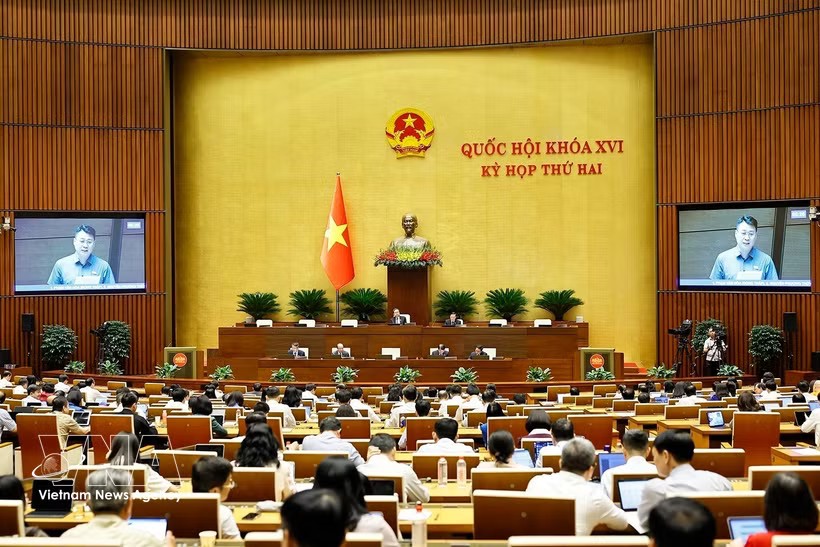
It is noteworthy that by 2025, Vietnam had abolished the death penalty for 8 crimes. One year later, why is there a renewed effort to significantly reduce the scope of application of the death penalty? In the face of opposition from some members of parliament, where will this reform lead?
According to the draft submitted by the Vietnamese government, the six crimes proposed for abolishing the death penalty are: riot crimes, terrorist crimes aimed at opposing the people’s government, rape of minors under 16 years of age, illegal drug trafficking, crimes against humanity, and war crimes. Among them, terrorist crimes aimed at opposing the people’s government are proposed to be incorporated into general terrorist crimes.
If the draft is approved, there will only be four criminal offenses in Vietnamese law that still allow the death penalty: treason, intentional homicide, terrorism, and illegal drug production.
However, the abolition of the death penalty for illegal drug trafficking and rape of minors has sparked significant controversy in Congress.
According to a report by Vietnam's 'Đại Tuyển Báo' on October 27th, Nguyễn Thanh Sang, a congressman from Ho Chi Minh City, stated that he supports the reduction of the scope of capital punishment in principle. He agrees to abolish capital punishments for crimes such as riots, crimes against humanity, and war crimes. However, he does not agree with abolishing capital punishments for drug trafficking and rape of minors.
He pointed out that the situation of drug crimes in Vietnam is very complex, and criminal activities cause serious harm to families and society as a whole.
In his view, many drugs are produced overseas and then transported into Vietnam, where they eventually end up in the hands of drug users through the sale trade. Therefore, combating the crime of illegal drug trading is an important step in eliminating the harm caused by drugs.
‘We have seen that some cases involve hundreds of kilograms, or even thousands of kilograms of drugs. If such actions are no longer subject to the death penalty, it becomes difficult to provide sufficient deterrence to criminals.’
Ruan Qingsang further warned that if the death penalty for drug trafficking is abolished, Vietnam could become a transit point for international drug smuggling. It could also undermine Vietnam’s goal of achieving at least 50% rural and urban areas free from drugs by 2030, as well as at least 20% of provincial-level areas being free from drugs.
However, he does not advocate imposing the death penalty on all serious drug trafficking cases. Instead, he proposes a compromise: raising the threshold for drug quantities stipulated in the criminal law, and reserving this maximum penalty only for the leaders and heads of criminal groups, as well as those who traffick in particularly large quantities of drugs.
He suggested that Vietnam could wait until 2030, after summarizing the implementation of anti-drug policies and obtaining more solid practical evidence, before the parliament decides whether to completely abolish the death penalty for drug trafficking crimes.
Representative Trần Thế Kính from Quảng Hóa Province also stated that drug-related crimes in Vietnam remain complex at present. Arbitrarily changing the maximum penalty may weaken the preventive and deterrent effects of the law.
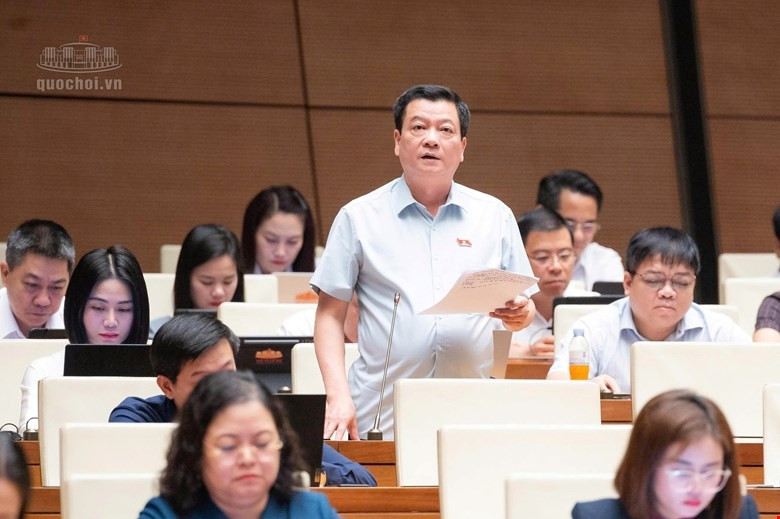
He believes that the issue of capital punishment must be considered in relation to Vietnam’s long-term goal of building a 'narcotics-free society'. Whether abolishing the death penalty for drug crimes completely at this stage is conducive to achieving this goal requires further evaluation.
Chen Shijing also suggested that it would be advisable to study ways to raise the threshold for applying the death penalty, and to apply the most severe punishments to cases where the social harm is particularly serious, rather than simply abolishing the death penalty.
Tùng Tà province representative Phạm Văn Hòa also asked the drafting department to consider this carefully.
He stated that it is necessary to maintain the death penalty in the face of the continued existence of large-scale drug trafficking activities. The adjustment of the maximum penalty should be considered only after a significant reduction in domestic drug-related crimes has been achieved.

Fan Wenhe also pointed out that there is significant disagreement among congressional representatives on this issue. Some support the elimination of the provision, while others firmly demand its retention. If it becomes difficult to reach a consensus, it might be advisable to organize separate votes on the relevant provisions.
Meanwhile, Ruan Qingsang expressed even stronger opposition to the abolition of the death penalty for rape committed against minors under the age of 16.
He pointed out that rape of minors is a crime with extremely serious social consequences. It not only causes physical harm to the victims but may also lead to long-term psychological trauma, severely affecting the peace of families and society.
Ruan Qingsang specifically mentioned several types of aggravating circumstances, including rape situations where the victim suffers severe physical damage and mental disorders, with the degree of physical damage reaching over 61%, resulting in the death or suicide of the victim, as well as situations where the victim is under 10 years old.
He believes that if a criminal act involves two or three serious aggravating circumstances, especially when it leads to the death of the victim, then the death penalty cannot be simply abolished on humanitarian grounds.
"If criminals commit two or three aggravating acts at the same time, leading to rape and the death of the victim, it is simply barbaric and a loss of humanity. There is no reason to abolish the death penalty for this crime. The death penalty must be retained to deter and punish such crimes severely."
This is not the first time that there have been humanitarian debates surrounding the death penalty in Vietnam.
On May 20, 2025, Fan Qingfenglan, representing Ho Chi Minh City, clearly opposed the abolition of the death penalty for crimes such as illegal drug transportation, manufacturing and selling fake drugs, corruption, and bribery during the review of the previous round of criminal law amendments.

She pointed out that when deciding whether to reduce the penalty, it is necessary to first observe whether the criminal situation has improved. If the number of related crimes significantly decreases and the social situation becomes stable, then it is indeed possible to consider reducing the penalty. However, if crimes remain rampant and current severe penalties are not sufficient to deter criminals, then abolishing the death penalty would lack persuasive value.
Fan Qingfeng also cited the Vietnamese concept of 'the murderer shall die', asking whether serious criminals consider the consequences they will face when committing crimes.
When talking about humanitarianism, she raised that question that later became widely known: "Treating criminals with humanity means being cruel towards law-abiding citizens, as well as towards the victims and their families."
She emphasized that humanitarianism should not be discussed solely from the perspective of the criminal's situation. It is also necessary to consider whether families who have lost their loved ones due to crime can accept such criminal policies.
Unlike some members of Congress who demand the retention of the death penalty, the Vietnamese Ministry of Public Security, responsible for this criminal law reform, has instead become a key promoter in continuing to reduce the scope of application of the death penalty.
On October 27th, Vietnamese Public Security Minister Lương Thanh Hồng stated in his response to the parliament that reducing the scope of application of the death penalty is a judicial reform direction that Vietnam has long adhered to, and it is not a new policy introduced suddenly through this legislation.
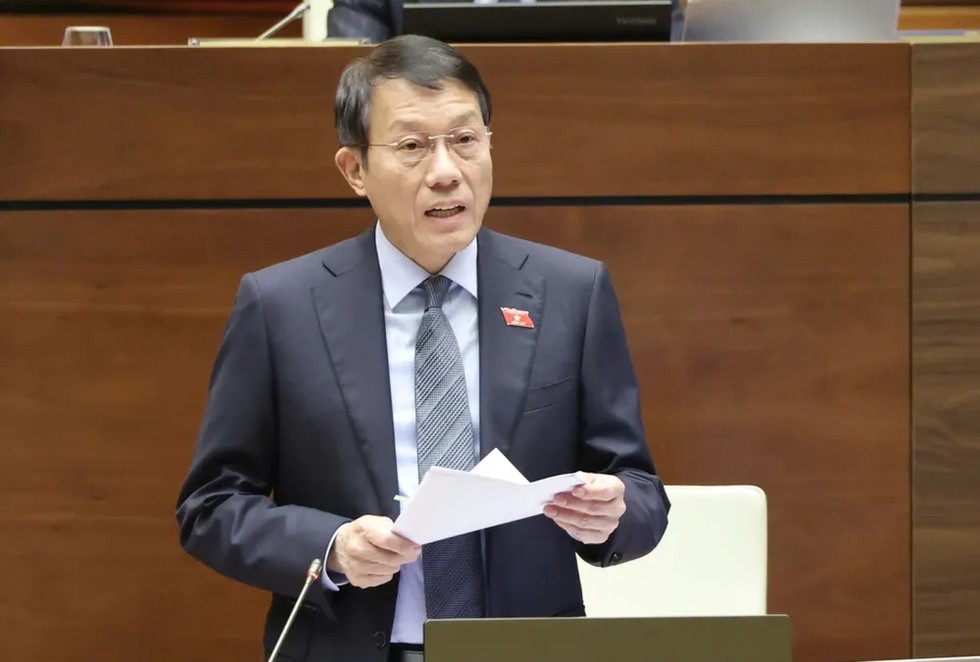
He first acknowledged that the crime of illegal drug trafficking is particularly harmful to society, and there is a real basis for the concerns expressed by Congress representatives regarding this issue.
However, Liang Sankuang emphasized that the situation of those who actually participated in drug crimes is very complex. Some people have insufficient legal awareness and were lured, deceived, or even coerced by criminal groups into participating in these activities. Not all participants share the same subjective malice.
For these personnel, if direct application of the most severe death penalty were adopted, it might not meet actual requirements for combating crime.
Liang Sanghuang proposed a question from a practical enforcement perspective: If the criminal suspect is certain that they will be sentenced to death if captured, they might choose to resist to the death, even attacking law enforcement officers with guns.
On the contrary, abolishing the death penalty and giving criminals a chance to live may reduce this resistance, encourage them to confess their crimes actively, and help the public security organs crack down on entire criminal organizations.
Therefore, in his view, reform does not mean relaxing measures against drug crimes, but rather attempting to improve the overall effectiveness of combating criminal networks through different sentencing arrangements.
This view also received support from some members of Congress.
Vietnamese Deputy Director of the Ministry of Public Security and Congressman Huỳnh Ngọc Liêm pointed out that Vietnam has been imposing severe punishments for drug-related crimes for many years, but the criminal situation remains complex. Some drug trafficking groups are even expanding their operations and improving their methods of committing crimes.
He believes that it is not appropriate to simply equate the severity of punishment with a reduction in crime.
The ultimate goal of criminal policy is to reduce crime, make society safer, and make law enforcement more effective.
This also highlights a unique aspect of this debate: some members of Congress want to continue relying on the death penalty as a deterrent against crime, while the Ministry of Public Security and some representatives with law enforcement backgrounds believe that reducing the death penalty might be more conducive to solving crimes and ensuring law enforcement safety.
Regarding the crime of raping minors, Liang Sanguang also emphasized that abolishing the death penalty does not mean that criminals can receive lighter punishments. Life imprisonment remains a very severe punishment; if the criminal act also constitutes the crime of intentional homicide, then the death penalty may still be applied in accordance with relevant legal provisions.
Although this amendment has sparked controversy, in the longer historical context, reducing the scope of application of the death penalty is not a new policy introduced by the Vietnamese government suddenly.
In 1985, Vietnam’s first unified criminal code stipulated as many as 44 categories of crimes for which the death penalty could be imposed. Since then, as the criminal law has been continuously revised, the scope of application of the death penalty has gradually been narrowed down.
In the 1999 Criminal Law, the number of crimes for which the death penalty was imposed was reduced to 29. In 2009, this number further decreased to 22. In 2015, the number of such crimes was reduced again to 18.
In June 2025, the Vietnamese National Assembly passed another amendment to the criminal law, abolishing the death penalty for eight crimes at once. These crimes include espionage, illegal drug trafficking, manufacturing and selling fake drugs, corruption, and bribery. As a result, the number of crimes punishable by death has been reduced from 18 to 10.
Among them, the abolition of the death penalty for corruption and bribery has drawn attention. This policy adjustment is of great practical significance, as Vietnam had previously imposed the death penalty for particularly serious financial crimes and corruption cases.
According to the new regulations, criminals who have been sentenced to death due to relevant crimes and whose sentences have not yet been carried out can be changed to a lighter punishment or reduced to life imprisonment under legal conditions.
After a year, the Vietnamese government has once again proposed to abolish the death penalty for six crimes. If this reform is successful, the number of crimes for which the death penalty can be imposed will be reduced from 44 in 1985 to 4.
Vietnam’s official explanation states that this adjustment is not only necessary to implement judicial reform policies and strengthen human rights protection, but also helps to align with international criminal justice rules.
In recent years, the issue of capital punishment has become an important obstacle in the process of extradition and judicial assistance in some countries. In countries that have abolished capital punishment, before transferring criminal suspects, they will require the receiving country to guarantee that the suspect will not be executed. Therefore, reducing the scope of application of capital punishment is also beneficial for Vietnam in strengthening cross-border pursuit and criminal judicial cooperation.
However, this does not mean that Vietnam has decided to completely abolish the death penalty. Even according to the draft in 2026, serious crimes such as intentional homicide, treason, terrorism, and illegal drug production can still be punishable by death.
Meanwhile, this revision of the criminal law also involves adding new types of crimes and adjusting the penalties for some economic crimes.
In fact, the discussions in the Vietnamese legal community regarding the retention or abolition of the death penalty have gone beyond the simple debate between punishment and forgiveness over the past few years.
Supporters of reducing the death penalty believe that the death penalty is irreversible. Once a judicial error occurs, it can lead to irreparable consequences. For some serious crimes that do not involve intentional killing, imposing life imprisonment instead of the death penalty can achieve both punishment and social isolation, while also reducing the risk of irreversible judicial errors.
Another line of reasoning emphasizes the actual effectiveness of criminal governance.
If the offender believes that the likelihood of being caught is very low, then even if the death penalty is stipulated by law, it may not effectively prevent crime. Instead of simply increasing the penalties, it is better to strengthen crime prevention, investigation, and the recovery of illegal gains.
However, those who are cautious believe that Vietnam still faces complex drug-related crimes and serious cases involving minors. In a situation where crime prevention, social governance, and law enforcement capabilities need to be improved, canceling the maximum penalties too quickly could undermine the deterrent power of the law and also weaken public confidence in judicial fairness.
It is worth noting that the two parties are not completely opposed to each other. Many representatives who oppose abolishing the death penalty for drug crimes also agree to reduce the scope of application of the death penalty for other crimes. They even advocate raising the threshold for drug quantities, thereby reducing the number of cases where the death penalty is actually imposed.
The real differences between the two sides lie in: which crimes can be exempted from the death penalty, and how quickly the reforms should be implemented.
According to arrangements announced by the Office of the National Assembly of Vietnam, the Standing Committee of the National Assembly will continue to review and amend legal drafts such as the Criminal Code (Amendment) at its eighth meeting scheduled for November.
Although some members of parliament advocate retaining the death penalty for particularly serious crimes, or at least delaying the reform process, Liang San Guang has stated that there is general agreement among parliamentarians on reducing the scope of application of the death penalty. It is expected that the amendment to Vietnam's criminal law will be passed this time.
From 44 items in the 1985 law to the currently proposed retention of only 4 items, the scope of capital punishment in Vietnamese criminal law has undergone significant changes. However, when reforms involve areas that are highly concerning to society, such as drug crimes and serious violations against children, finding a balance between punishing crimes, protecting the rights of victims, and restricting capital punishment remains a problem that Vietnamese legislators must address.