The United States mid-term elections are scheduled to take place on November 3rd. All 435 seats in the U.S. House of Representatives will be re-elected, and one-third of the seats in the Senate will also be changed. Due to factors such as President Trump’s trade policies and military conflicts in the Middle East, which have caused soaring energy prices, the Republican Party is facing the risk of losing control of Congress.
According to a White House official and two people familiar with the matter, cited by Reuters on November 1, over the past few months, the White House has been preparing for the possibility of the Democrats taking control of Congress, attempting to develop plans to bypass Congress and continue advancing their political agenda.
Sources familiar with the situation revealed that since April, senior officials such as Stephen Miller, the White House Policy Deputy Chief of Staff, and Russell Wattenberg, the Director of the White House Office of Management and Budget, have been working with the White House Legal Counsel Office to determine which administrative measures related to immigration, tariffs, housing costs, and federal spending Trump can implement without congressional approval.
White House officials said that White House Counselor Will Schaff and his team are also conducting related research to determine “what actions Trump can legally take, in what areas he can challenge the limits of his power, and how these decisions can be defended in court.”
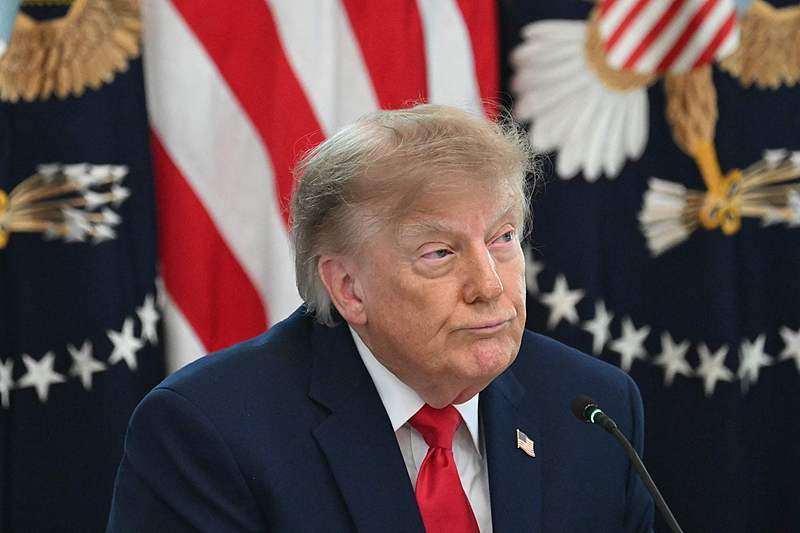
US President Trump Visual China
According to those familiar with the matter, the executive measures that the White House is considering include imposing new tariffs on the import of critical minerals and wind turbines, imposing stricter restrictions on visas for international students and temporary foreign workers, as well as reducing costs of housing and construction. A source familiar with the situation said that federal agencies have submitted proposals and judicial review reports, discussing actions that the government might take unilaterally.
Sources familiar with the matter also said that White House Management and Budget Office, led by Wat, is responsible for overseeing federal spending. He is researching which priorities can be advanced using funds allocated by Congress. He is also considering adjusting the rules for federal funding to increase the White House's influence over federal spending.
According to reports, U.S. courts can prevent Trump from taking administrative measures that go beyond his legal authority. In response, the White House is preparing to seek legal advice from the U.S. Department of Justice to determine which actions Trump can take without congressional approval and how to defend those actions in court.
White House officials revealed that Trump has listened to reports on preparations and has participated in related discussions.
Reuters noted that since returning to the White House in January 2025, Trump has repeatedly tested the scope of presidential power, using his executive authority to promote tariffs, strengthened immigration enforcement, and reduced the number of federal government employees.
Trump has repeatedly invoked national emergencies to bypass Congress and expand his authority to act without new legislation. Although the U.S. Congress can vote to terminate these emergencies, Trump can veto such resolutions. Both the House of Representatives and the Senate require more than two-thirds votes to override Trump’s veto.
However, if the Democratic Party manages to turn the tables in these mid-term elections and gain control of Congress, it could still pose obstacles to Trump’s presidency. For example, they might refuse to pass bills supported by Trump. However, Trump could also veto Democratic proposals he dislikes. This kind of mutual veto could lead to a political deadlock in the U.S. Congress.
Currently, the Republican Party controls both chambers of the U.S. Congress with a narrow majority of 218 in the House of Representatives and 53 in the Senate. This means that the Democrats would need to gain a net of four seats in both houses to potentially overcome the Republicans’ control.
According to recent polls, the Democratic Party may win the House of Representatives, while the race for the Senate remains close. The White House has denied claims that the Republican Party might lose in the midterm elections, calling such reports "false information".
