On the eve of the U.S. midterm elections, it seems that the Democrats are close to securing a majority in the Senate. However, many of the contested seats are in red states where the Republicans have traditional advantages, making the election results still close, and could ultimately favor either party.
The Democrats expanded their electoral landscape to a scale that was almost unexpected at the beginning of the year. The political environment in the United States has seemed to be favorable to the party over the past few months. According to average poll results compiled by CNN, President Trump has a support rate of 34%. Voters' dissatisfaction with the economy, the war in Iran, and corruption issues seem to be fueling the political enthusiasm of Democratic supporters across the country.
If the Democratic Party wants to win a majority in the Senate this year, it must retain all its existing seats and also gain four seats currently controlled by the Republicans.
Meanwhile, the Republican Party is investing huge amounts of money to defend its majority in the Senate. The financial support comes from President Trump’s political network and tech giant Elon Musk. According to data from advertising monitoring firm AdImpact, during the last month of the midterm elections, the Republican Party spent more on advertising than the Democratic Party across 11 election races listed on this list: $560 million and $521 million respectively. If we exclude Georgia and North Carolina, which the Republicans have almost given up, the gap between the two parties becomes even more pronounced, with approximately $550 million and $469 million spent on advertising.
CNN has ranked the 11 Senate seats that are most likely to change hands. The ranking is based on interviews conducted by CNN, including conversations with campaign strategy advisors involved in the Senate elections, as well as analysis of candidate fundraising efforts, public opinion, and the partisan political environment in each state. The ranking does not predict which candidate will win a specific election, nor does it predict which party will control the U.S. Senate. Instead, it presents the latest situation in each election campaign at the end of the midterm election season.
North Carolina is the state where Senate seats are most likely to change ownership on Tuesday. The Democrats seem to have a chance to win the state's senator election for the first time since 2008. A latest poll conducted by HiPoint University and Pew Research Corporation shows that among potential voters, Democratic candidate Roy Cooper leads Republican senator candidate Michael Waltz by 14 percentage points.
In this state where Trump won the presidential election three times, no one expected the Democrats to win with such a huge margin. However, realizing the challenges they faced, the Republicans cut their spending in the final stages of the campaign. Over the past two weeks, the Democrats invested $10.4 million, while the Republicans only spent $2.5 million.
According to a CNN survey average, former U.S. Senator Sherrod Brown has a support rate of 50% to 45%, leading Republican Senator Jon Irwin by 5 percentage points.
Brown lost his bid for a fourth term as senator in 2024. During this campaign, he began early on shaping voters' impressions of Hirstad. Hirstad had previously been appointed to fill the Senate seat left by Vice President Vance. The Democrats launched a fierce attack on Hirstad, focusing on issues such as data centers, Epstein’s files, and corruption. In the Democratic ads that ran most frequently in the last two weeks, voters were reminded of Hirstad's involvement in energy scandals that plagued the state.
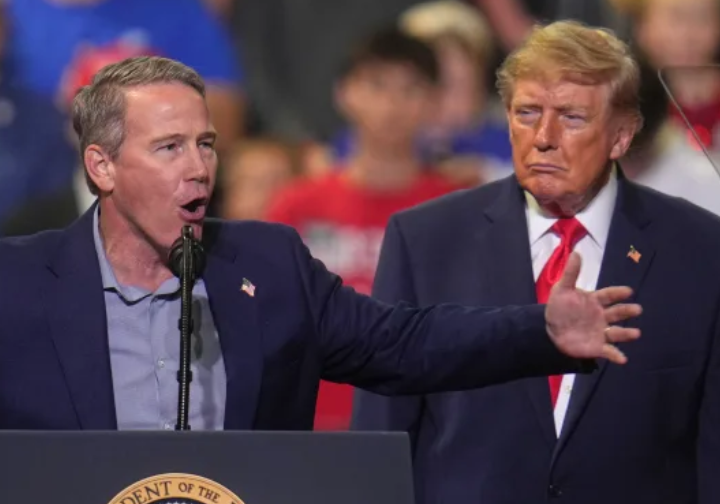
Jon Hirstede
During the same period, the most advertising spent by the Republican Party focused on attacking Brown’s positions on tax and immigration issues. The campaign spending for the Ohio Senate elections ranked second in this election cycle. According to AdImpact data, the spending of Republicans and Democrats in October was approximately $141 million and $102 million, respectively.
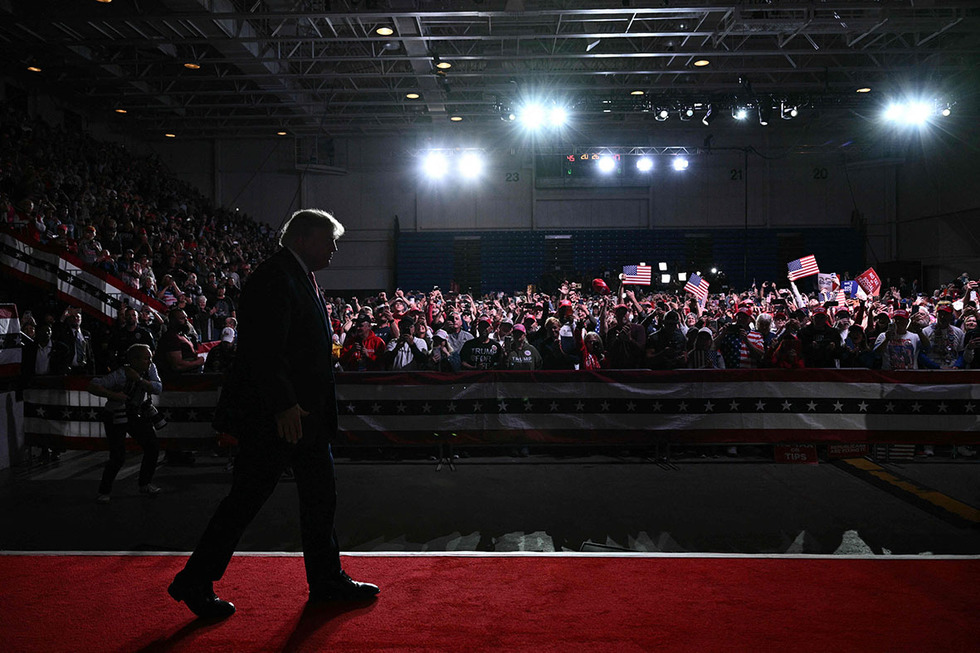
During the Trump era, the political leanings in Ohio gradually shifted to the right. In the last month of his campaign, Trump visited the state three times to help Hirstad win the election. However, the remarks Trump made at these rallies were mostly praise for Hirstad's appearance, rather than discussions about issues that affect voters' lives.
The election for the governor of Ohio has also received more attention at this final stage. Republican candidate for governor, Vivek Ramaswami, released a controversial advertisement featuring his mother, who has a distant relationship with her Democratic opponent, Amy Acton. Recent polls show Acton leading Ramaswami, indicating that the local political environment may favor Democrats in a victory on Tuesday.
It has been 32 years since a Democratic candidate was elected in statewide elections in Texas. According to polls compiled by CNN, there is no clear leader between Democrat James Tarryko and Republican Ken Paxton.
However, multiple factors may work together to make it possible for the Democrats to turn Texas into a ‘blue state’. Nevertheless, the state’s deep-rooted Republican political tendencies, along with the massive campaign funding provided by Republicans, could also lead to disappointment for the Democrats once again.
According to a CNN poll average, there is no clear leader among the contenders. However, two recent polls, including a joint survey by The New York Times and Siena College, as well as a CNN survey, indicate that Taralico is ahead of Paxton, with a lead that exceeds the margin of sampling error.
A poll conducted by CNN for SSRS last month found that Paxton has a very negative image among voters, which is beneficial for Taralico. Additionally, Taralico has received strong support from black, Latino, and Asian voters in the state, some of whom turned in favor of Trump in 2024.
With its strong fundraising efforts, Taralico took the lead in television and radio advertising throughout the summer, after defeating Republican U.S. Senator John Cornyn in Paxton. Cornyn had previously warned that if the controversial Texas attorney general were to be nominated, the state's Republican candidate might suffer a “catastrophic defeat”.
However, Republican reinforcements eventually came to support Paxton. According to AdImpact data, since the primary elections, Republicans have spent over $278 million on advertising in this campaign. As the largest political donor in American politics, Musk alone contributed $168 million. The financial support from Musk for this election exceeds that of any other campaign.