Germany restricts the export of tank engines, Turkey turns its attention to South Korea; Japan withdraws from nuclear power construction plans, and South Korea is now targeting this deal worth about $30 billion.
On November 3rd, South Korean President Li Atomsong held talks with Turkish President Erdogan. Both sides agreed to expand cooperation in areas such as nuclear power and defense industries. Four memorandums of understanding were signed regarding nuclear power financing, energy, minerals, and technology.
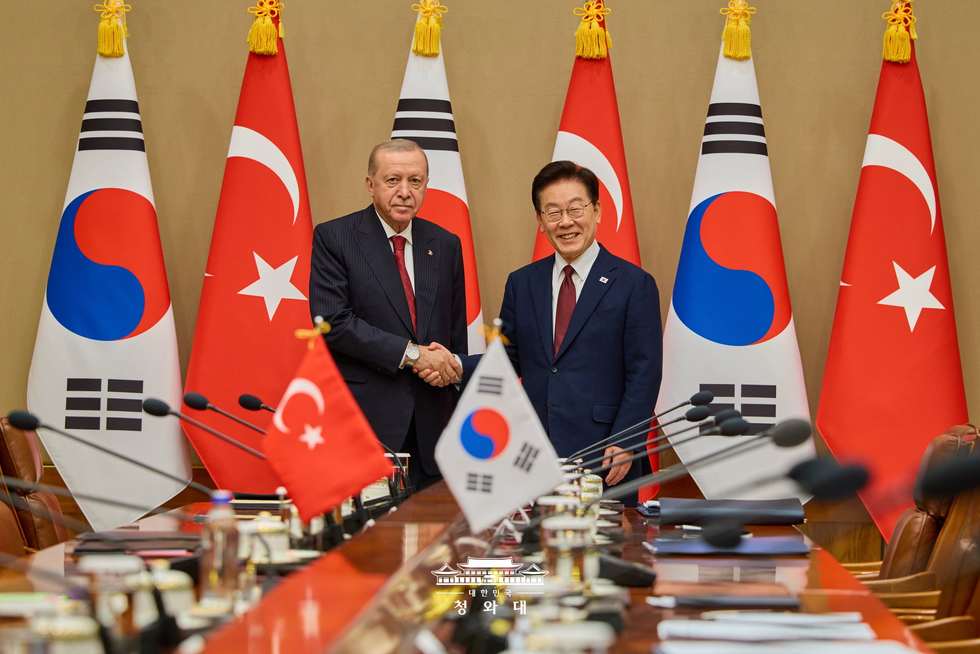
Lee Jae-myung and Erdogan at the South Korean Presidential Palace
This is Erdogan's first visit to South Korea since 2018. In November last year, Lee Jae-myung visited Turkey and held talks with Erdogan.
Li Zaiming stated at a joint press conference after the talks that the two countries will further expand joint production and technical cooperation in the military industry, as well as jointly explore markets in third countries. In September this year, both sides signed a letter of intent for ship cooperation, planning to expand the scope of cooperation to naval equipment.
Erdogan stated at a joint press conference that the defense industry is one of the key areas where strategic partnerships between the two countries have yielded tangible results. “During my meeting with President Li Zhāi Míng, we emphasized the need to increase successful collaborative projects such as ‘Storm’ self-propelled howitzers and ‘Altay’ tanks.”
National defense industry is one of the main areas where our strategic partnership has achieved specific results. Erdoğan said he hopes to see more similar joint projects in the future.
Both of these equipment items involve Korean technology. The development of military cooperation between the two countries is closely related to Turkey’s experience of being repeatedly restricted in weapon exports by Western allies.
In the late 1990s, Turkey hoped to introduce the technology of the German PzH2000 self-propelled howitzer, but the related cooperation did not materialize. The South Korean K9 self-propelled howitzer subsequently came into Turkish eyes. In 2001, both parties signed a contract, with South Korea providing technology and key components. Based on this, Turkey developed the T-155 “Storm” self-propelled howitzer.
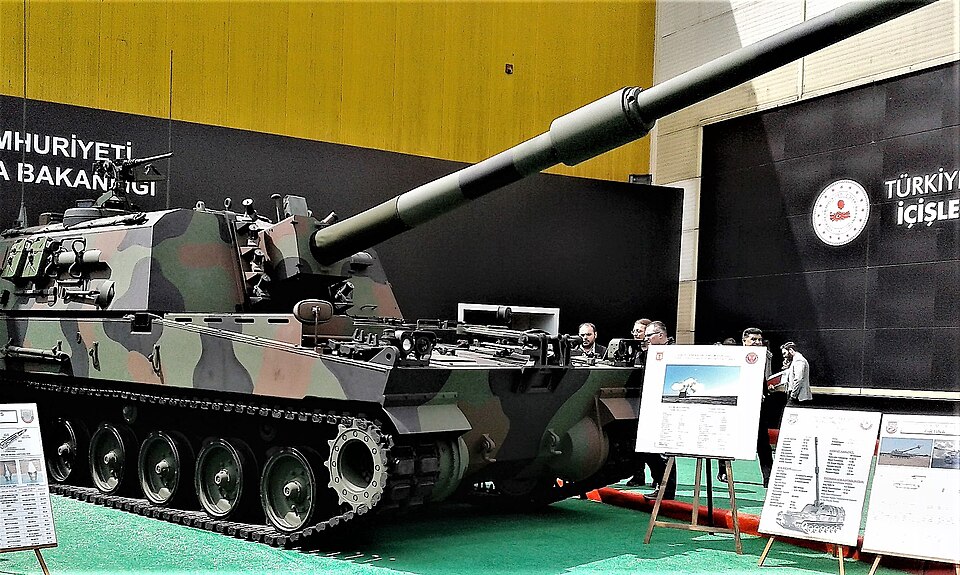
Turkish T-155 "Storm" Self-Propelled Howitzer - Media Reports
In 2008, South Korean company Hyundai Rotem signed a technology transfer contract worth approximately $400 million with Turkey to assist in the development of Turkey’s own “Altay” main battle tank.
But this tank has been unable to achieve mass production for a long time, and one of the key obstacles still comes from Germany.
"Altay" was originally planned to employ a German MTU diesel engine and a RENK gearbox. In 2019, following Turkey's military operation in northern Syria, several European countries including Germany tightened their export of weapons to Turkey, thereby disrupting the supply plan for the German power system.
In November 2020, sources within Turkey's defense industry revealed that the 'Altay' project has been severely delayed due to the inability to obtain key components such as engines and gearboxes. The French armored technology that Turkey originally planned to purchase has also been affected by political disputes between the two countries.
In 2021, Turkish and Korean companies reached a cooperation arrangement. Doosan provided the DV27K diesel engine, while S&T Dynamics provided the EST15K automatic transmission. In October of that same year, both countries signed letters of intent for further cooperation.
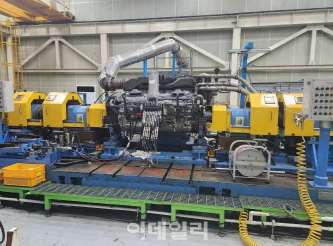
Turkey Tests Korean Power Pack, Foreign Media
South Korea's tank power systems also have a German technical background. The first batch of the South Korean K2 main battle tanks used German MTU engines and Renk gearboxes. Although domestic engines were later installed, the domestic gearboxes failed to pass durability tests. It was not until 2024 that South Korea approved the use of domestic gearboxes on the fourth batch of K2 tanks.
In 2025, the “Altai” tanks equipped with Korean power systems will begin to be delivered in bulk. According to Turkey’s plans, the first batch of 85 T1-type tanks will use Korean engines and transmissions, while subsequent models will be equipped with Turkish-developed BATU power systems.
Although Turkey is a NATO member country, it has had multiple disputes with its allies over military sales issues. In addition to Germany restricting the export of tank power systems, the United States expelled Turkey from the F-35 fighter jet program due to Turkey's purchase of Russian S-400 air defense systems. In 2020, the United States also imposed sanctions on Turkish defense industry-related institutions.
Today, there is a new direction in military cooperation between Korea and Turkey. Before visiting Korea on November 2nd, Erdogan revealed in an interview with Yonhap that South Korea has shown interest in the Turkish-made PD170 turbojet diesel engine.
PD170 was developed by a Turkish company and is mainly used for drones. Erdogan welcomed this development, stating that both parties can further expand their cooperation in the fields of drones, engine technology, and electronic systems.
However, no new specific weapon procurement orders were announced during this summit meeting. The ship cooperation and joint export plans proposed by both sides remain to be implemented.
In addition to military-related projects, South Korea is also interested in a nuclear power deal with Turkey worth about $30 billion.
South Korea is seeking to build a second nuclear power plant in Sinop, on the Black Sea coast of Turkey. The project plans to construct four nuclear reactors. According to the South Korean newspaper "Chungang Daily," the total investment for this project is estimated at about $30 billion. However, this nuclear power plant has faced several challenges, including the withdrawal of Japanese companies and delays in the construction plan, and it has not yet started construction officially.