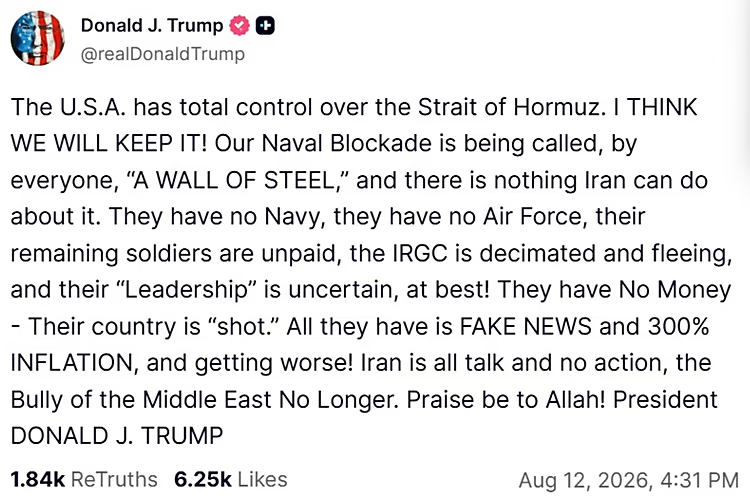
According to The New York Times, on June 15 local time, regarding the Strait of Hormuz, Iran's Foreign Ministry spokesperson Baghaie stated that Iran “does not seek to impose tolls, but will charge fees for the services provided.”
According to reports, it is not yet clear what services Iran will provide, but there were no such fees before the US-Iran war. Previously, Iranian officials indicated that environmental-related fees might be imposed.
According to international law, charging tolls is illegal, but it is permissible to charge fees for the services provided.
It is reported that the idea of charging for ships passing through the Strait of Hormuz was first proposed after the US and Israel attacked Iran on February 28, leading to Iranian retaliation against merchant vessels in that area. In March, Iranian officials announced that they would start charging for ships passing through the strait. In May, Iran established the Persian Gulf Strait Management Authority, stating that it would be responsible for managing ‘safe passage permits’. In the same month, it was reported that Iran and Oman were discussing the establishment of a permanent charging mechanism for ships passing through the Strait of Hormuz.
This has raised concerns among leaders around the world that the Strait of Hormuz may never return to its pre-war state. On June 15th local time, French President Emmanuel Macron said, “We defend international law and will do everything possible to ensure that this waterway is not subject to tolls.”
According to a report by the American consumer news and business channel (CNBC), on June 15 local time, U.S. Vice President Williams stated that it is expected that the US-Iran Memorandum of Understanding will ensure the long-term open passage through the Hormuz Strait without tolls. These are details that need to be determined during the subsequent technical negotiations.