On July 13th local time, Indian Foreign Minister Sujaya Srinivasan officially launched the international campaign to secure a non-permanent seat on the United Nations Security Council for India during a special event at the United Nations Headquarters in New York.
Unlike the previous two elections where there was little suspense, this time it involves competing with Tajikistan for the same seat. Tajikistan has never been a member of the Security Council, but it has received endorsement from the Islamic Cooperation Organization, which consists of 57 member states.
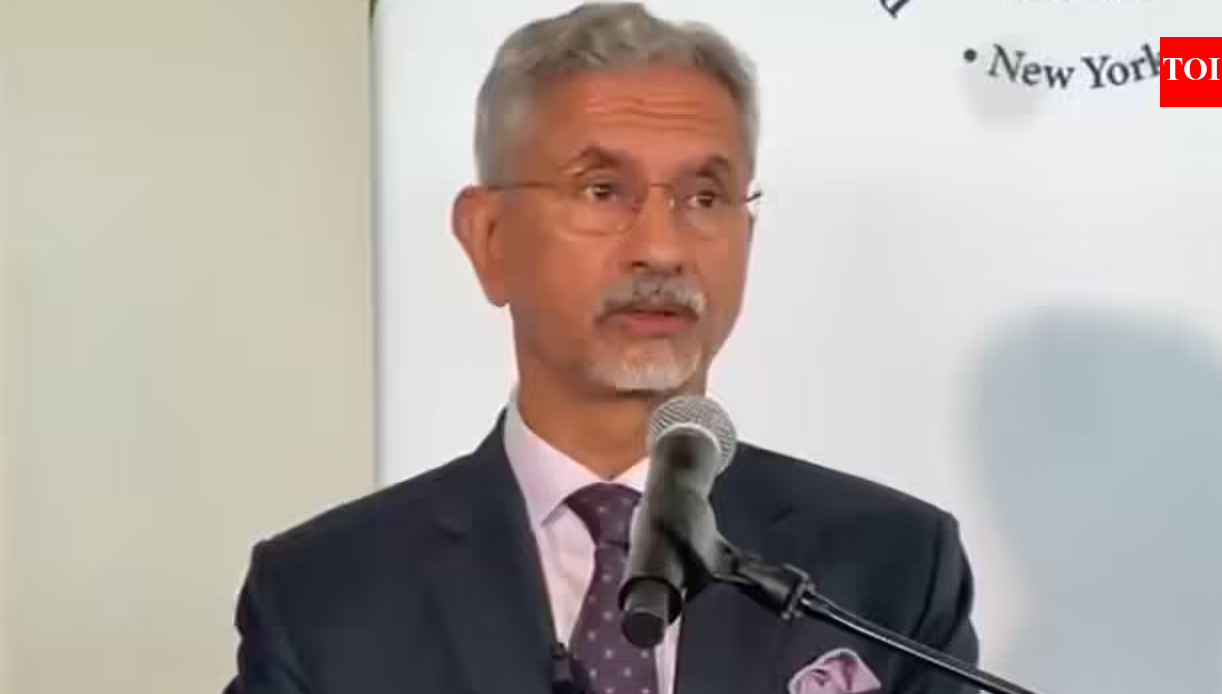
Su Jiesheng officially announced his candidacy by sharing video screenshots.
According to the Indian Times, Su Jiesheng announced the official theme of this campaign as 'SHANTI' (meaning 'peace' in Sanskrit), which signifies 'full development through regulation, trust, and integrity'.
Su Jiesheng said that the world is currently facing a 'deep paradox': humanity has never had such powerful capabilities to improve well-being, but the effects of conflict, violence, and instability are also spreading to countries thousands of miles away. He stated that in the face of an increasingly complex international situation, the United Nations must play a leading role, and the Security Council should also take on greater responsibilities.
India has proposed six priority issues in this campaign, including strengthening the voice of the 'Global South', promoting multilateral institutional reforms, reforming peacekeeping operations, addressing the abuse of artificial intelligence, maintaining a free and open maritime order, and combating terrorist financing.
India's bid for this seat was not made suddenly.
In December 2022, as the tenure of India as a non-permanent member of the UN Security Council from 2021 to 2022 was coming to an end, Sujishankar announced publicly that India would participate in the elections for the period from 2028 to 2029. Indian media analysts pointed out that India’s intention in this election is to shorten the gap between its terms of office, which has lasted for over a decade, in order to maintain a continuous voice in the highest decision-making body of the United Nations.
In recent years, Indian leaders have begun seeking votes from various countries directly during their visits.
"India Times" reports that Su Jiexing visited Qatar, Bahrain, Kuwait and Oman prior to the official launch of the campaign, before traveling to New York. He then began campaigning at the UN headquarters on July 13th. The report states that one of the key tasks during this trip was securing support for India's candidacy.
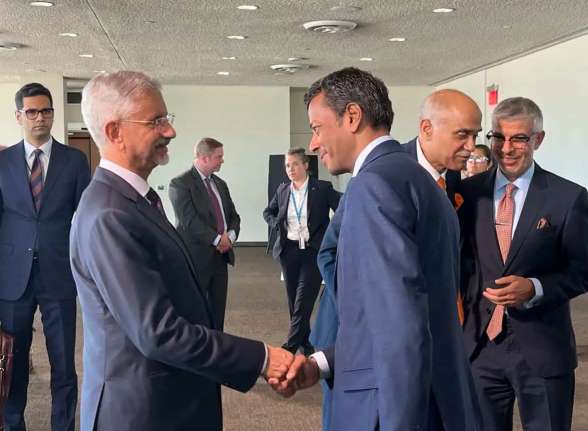
July 13th, Su Jiesheng shook hands with the Bahrain representative at the United Nations. PassBlue
In May this year, Sujay Singh also visited Jamaica. The Jamaican government explicitly supported India’s bid to become a non-permanent member of the Security Council for the years 2028 to 2029 during the bilateral talks. The Indian Ministry of Foreign Affairs stated that this was the first official bilateral visit by an Indian Foreign Minister to Jamaica.
Apart from Su Jie, Indian Prime Minister Narendra Modi also didn’t idle away his time. During a speech at the Indonesian parliament on July 7, Modi emphasized that “the global order is changing rapidly, and developing countries like ours are seeking equal participation and a greater role in global affairs.” Indian media generally believe that this statement aims to respond to India’s demands for reform of the Security Council and a greater international voice.
As of now, several countries have publicly supported India’s candidacy. The United States, Austria, Fiji, and other countries have already expressed their support for India’s candidacy in joint statements. In recent years, India has also strengthened its ties with African, Caribbean, and Pacific island countries through projects such as the “Global South Voice Summit” and development assistance and technical cooperation programs.
The non-permanent members of the Security Council are elected by secret ballot by the General Assembly of the United Nations. For India to be elected, it must receive the support of a majority of two-thirds of the member states present and voting.
India's biggest competitor this time is Tajikistan, a Central Asian country.
Unlike in previous bids for seats in 2011-2012 and 2021-2022, India now has to compete with Tajikistan for just one seat in the Asia-Pacific group. The election will take place in June 2027 at the United Nations General Assembly, and candidate countries must receive the support of a majority of two-thirds of the member states present and voting.
Tajikistan's Foreign Minister Siroidin Makhritdin announced his candidacy in September 2022. At that time, he stated that small countries should also have the opportunity to contribute through the Security Council for maintaining international peace and security. Tajikistan joined the United Nations in 1992 and had never previously served as a member of the Security Council.
In 2023, the Organization of Islamic Cooperation (OIC), consisting of 57 member states, announced its support for Tajikistan’s candidacy. This collective statement provided significant diplomatic support to Tajikistan.
Based in Brussels, Richard Goovan, Director of the Global Issues and Institutions Program at an international crisis organization and a United Nations expert, told the independent media PassBlue, which covers United Nations affairs, that "great powers do not guarantee victory." He pointed out that many foreign diplomats believe that countries that have never been members of the Security Council should also have opportunities to serve on the council, and that medium-sized nations should not prevent smaller nations from taking turns in the Security Council.
Recent elections to the Security Council have also seen several unexpected results. In the 2027-2028 election for non-permanent members of the Security Council, Germany, which was widely favored, lost to Austria and Portugal. Kyrgyzstan also defeated the Philippines through a well-organized campaign and was elected as a non-permanent member of the Security Council for the first time. Govan believes that these results indicate that a country's size and diplomatic resources do not directly determine the voting outcome.
However, India still has a clear advantage. India has served as an non-permanent member of the Security Council eight times, and it has a relatively mature diplomatic network at United Nations Headquarters. Gowan commented that India has always been a “active and capable member of the Security Council”, and is also familiar with the rules of operation of the United Nations.
Although this election is for non-permanent council seats, India's long-term goal is to become a permanent member of the Security Council.
India has long argued that the current power structure of the Security Council reflects the international situation of 1945, and cannot fully represent today's world. India often bases its requests for expanding the number of permanent members of the Security Council on factors such as population size, economic size, nuclear status, status as a founding member of the United Nations, and records of participation in peacekeeping operations.
According to the Indian 'Economic Times', India's Permanent Representative to the United Nations, Pralbatanee Harish, stated during the Intergovernmental Negotiations on Security Council Reform in June that if the reform only increases the number of non-permanent members and does not expand the category of permanent members, such a reform would be 'a failed reform', as it would not fundamentally change the existing power structure. He also criticized some countries for using the principle of 'nothing is determined until all agreements are reached' to delay the reform process.
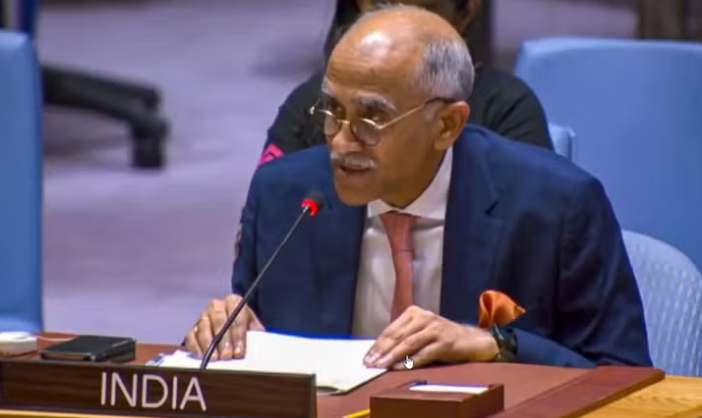
Indian Ambassador to the United Nations Indian Newspaper Trust
India advocates for the expansion of both the permanent and non-permanent membership categories, and is pushing for the reform of the Security Council to enter the text negotiation stage.
However, increasing the number of permanent members requires a amendment to the United Nations Charter. The amendment must not only be approved by two-thirds of the General Assembly’s member states, but also by two-thirds of all member states, including the five permanent members. Therefore, progressing this change is extremely difficult.
In the context of long-term stagnation in the reform of the Security Council, running for non-permanent membership remains a realistic way for India to enter the Security Council and expand its influence. A two-year term could also help India gain more support for continued efforts to become a permanent member.