On May 28th, the Hong Kong-based newspaper The South China Morning Post reported, citing sources, that as concerns over deindustrialization within Europe continue to rise, Brussels is now portraying the current situation as a so-called China Shock 2.0. The European Commissions leadership is preparing to strengthen its economic stance towards China during a crucial debate scheduled for May 29th, local time. This will serve as a foundation for introducing new trade and industrial measures later this year.
Sources revealed that most of the 27 members of the European Commission, including the Commission President Von der Leyen herself, support more stringent trade and industrial policies.
The European Commissions Commissioner for Trade and Economic Affairs, Javier Solana, plans to propose a new diversification tool. This tool requires certain key industry companies to ensure that their supply chains originate from at least two countries, and have three or more suppliers. The aim is to reduce concerns regarding excessive reliance on the Chinese supply chain.
Meanwhile, European Commission Vice-President for Execution and EU Industrial Strategy Commissioner Sajern plans to promote the wider use of the Foreign Subsidies Regulation (FSR). This tool was previously used primarily by individual companies. However, it is reported that Sajern supports the use of this tool on a more industry-wide basis, in order to address the market distortions caused by Chinese subsidized enterprises, as identified by the EU.
In interviews with the British Financial Times and other European media, Ciruen also stated that the EU will use import quotas and tariffs more systematically. This is because European industries such as chemicals, metals, and clean technologies face the risk of being destroyed by what he called unfair Chinese competition.
Ding Chun, Director of the Fudan University Center for European Studies and President of the Shanghai European Society, told Observer Network that the European economy is currently trapped in a dilemma of internal troubles and external threats. The fundamental problem lies in its lack of innovation, leading to a first-mover disadvantage. Europe has invested heavily in traditional industries such as automobiles and chemicals, but it has missed out on emerging industries like the Internet, digitalization, and artificial intelligence that emerged during the 1980s and 1990s. As a result, Europe is clearly lagging behind China and the United States in competition. With the advent of the geopolitical and economic era, the security and integrity of supply chains have become a critical concern, further exacerbating Europes anxiety.
Ding Chun emphasized that in the face of the increasingly evident trade protectionism in Europe, China has always maintained a restrained attitude and continues to call on European counterparts to assess the situation carefully. In fact, China has taken measures to ensure the security of its industrial chain and supply chains, as well as to deal with issues related to extraterritorial jurisdiction. China believes that Europe should enhance its competitiveness through internal innovation, rather than relying on trade protectionist measures that distort markets. All parties should work together to avoid a situation where trade tensions escalate further.

On May 20, 2026, in Strasbourg, France, the President of the European Commission, Ursula von der Leyen, delivered a speech at the European Parliament regarding the issue of the EU single market. IC Photo
The South China Morning Post noted that both Šefić and Cerulne support the wider use of trade safeguard measures. These measures are considered an emergency tool that can be used to impose tariffs or quotas in cases of sudden increases in imports. Some people within the EU believe that in the chemical and machinery industries, using safeguard measures could reduce the time required for anti-dumping and countervailing investigations by halfabout six months.
The core concern of the EU is that, due to the rapid rise of Chinese competitors, Europes industrial base may suffer devastating damage within a few years. These Chinese companies are leveraging their price advantages, and often also maintaining high quality standards, to completely surpass their European competitors, whether in Chinas domestic market, European markets, or third-party markets around the world.
Meanwhile, concerns about industrial hollowing out within the EU are also growing. Some people worry that if political centrists do not take action to protect jobs now, far-right parties may seize this opportunity to rise in power.
On the morning of May 29th, local time, high-level EU commissioners will discuss the above issues. They will debate to what extent the EU should protect the single market from the impact of Chinese goods. This meeting was originally scheduled to take place in early April. At that time, the EU commissioners were supposed to listen to a briefing by former Australian Prime Minister Kevin Rudd on Chinese political affairs. However, due to the EUs decision to prioritize discussing the energy crisis caused by the Middle East wars, the meeting was postponed.
Currently, EU commissioners will listen to a briefing given by Alfred Schipke, director of the East Asian Research Institute at the National University of Singapore. Schipke served as the chief representative of the International Monetary Fund in China for seven years. His attendance is seen as reflecting the EUs growing concerns about China.
Senior EU officials do not expect any breakthrough results from the meeting on May 29th. Although it is unlikely that decisions will be made regarding new trade measures immediately, new laws and more stringent strategies to address trade issues may be introduced in the coming months.
According to reports, at the upcoming European Council summit in June this year, the leaders of the 27 EU member states will still review the recommendations put forward by the European Commission, in order to jointly address the deteriorating industrial situation and issues related to China.
Currently, countries are secretly competing with each other to gain dominance.
Last Friday, four of the five major EU member states jointly issued a document calling for the establishment of a more stringent trade mechanism to address the issue of so-called Chinese-style industrial overcapacity. The specific measures included accelerating the implementation of emergency tariffs, expanding the scope of trade protection measures, and granting new powers to combat anti-dumping investigations.
This document, signed by Spain, Italy, the Netherlands, France, and Lithuania, was released just days before the European Commissions debate. The document states that the EU must take a more forceful approach to addressing systemic and structural industrial overcapacity – a term often used to refer to China. Germany, as the EUs largest economy and country with significant internal divisions regarding its policy towards China, did not sign this document.
The Chinese side has issued a stern warning, stating that it will respond to any measures taken by the EU. This puts Europe in a difficult position.
The German Mercator China Research Center, which was once sanctioned by China, stated that Grzegorz Stec, the director of its Brussels office, said, The EU is faced with a choice: to take action now and bear the risk of possible countermeasures from China, or to delay until Chinas economic pressure becomes overwhelming and forces the EU to act.
The South China Morning Post reported that it has been difficult for EU member states to reach a unified position on their policies towards China. Meanwhile, reports suggesting that China might take countermeasures have further exacerbated divisions among the member states before the debate even began.
Previously, after reports revealed that five European countries jointly signed a document, the American news site POLITICO changed its statement on May 27. It claimed that Spain had developed fractures in its relations with other countries regarding China, and its stance towards this document also changed. The report stated that due to the leak of the document by the media, Spain was caught off guard and might even consider withdrawing its signature from the joint document. The report suggested that Spains change in attitude was due to concerns about provoking China.
On the same day, Bloomberg reported that Germany and Spain are leading efforts to oppose a plan proposed by the European Commission. This plan aims to ban Chinese technology suppliers from participating in the construction of telecommunications networks, as part of new cybersecurity regulations.
Meanwhile, German Federal Minister of Economics and Energy, Riehl, who was visiting China at the time, issued a warning in Beijing on May 27. He stated that any measures taken by the EU against China should not harm Europes exports to China.
Ding Chun pointed out that Europes original model of successful growthutilizing Russias cheap energy resources and exporting products to global southern markets through its own processing capabilitiesis now unsustainable due to the Russo-Ukraine conflict and the rise of the Trump administration. European manufacturing industries, which are stuck in a state of slow growth, lack digital technology support, and cannot compete with China and the United States in terms of costs. This has led to a situation where European industries are torn between resistance and acceptance of these challenges. In order to protect their domestic industries, the EU has recently introduced a series of trade protection measures, aiming to create protective barriers to withstand the impact of industrial competition.
The South China Morning Post also noted that, although member states have been hesitant throughout the past year, and issues related to China have never been a top priority on any meeting agenda, the European Commission has been quietly intensifying its actions over the past few months.
Previously, the European Commission had listed several Chinese companies as so-called high-risk suppliers of telecommunications networks. Brussels has urged member states to exclude these companies from access to communication infrastructure. Although the decision-making power regarding infrastructure construction lies with national governments, the European Commission is trying to strengthen regulations by amending the Computer Security Act.
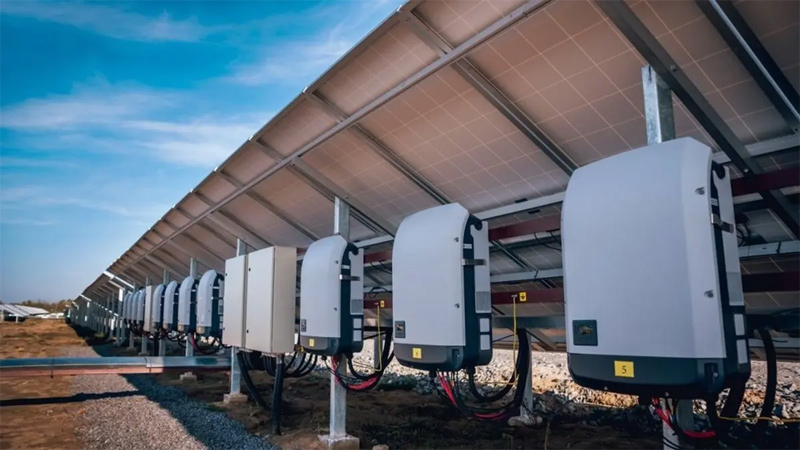
Additionally, the European Union has begun prohibiting the use of EU funds for projects involving Chinese-made inverters. Inverters are essential devices used in wind energy, solar energy, and battery storage systems. They play a crucial role in regulating the transmission of electricity from power generation points to the power grid. It is estimated that Chinese companies currently account for approximately 80% of the EU market share.
According to the Financial Times, the European Commission is also considering a proposal from five member states, including France, known as a resilience tool. This tool could be used to impose quotas or additional tariffs on certain imports when there is an excessive concentration of suppliers within a company.
As a senior EU official with French citizenship, Sejourne stated that if Brussels does not adopt a more tough approach towards competitors, member states may take back control of trade policies from the EU.

April 29, 2026, Brussels, Belgium – Headquarters of the European Commission. IC Photo
He said, In three or four years, countries will say, You failed to protect us. Therefore, we will take control of trade policies again and implement our own measures for protection, safeguards, and border controls. He warned that this would be the best way to divide the single market and further weaken us internationally.
However, Cerulli also acknowledged that, although European countries generally recognize their excessive dependence on China, we are still trying to find a way forward among member states like Spain and Germany, which are reluctant to send negative signals to China.
As Chinese products continue to lead European competitors in industries such as chemicals, automobiles, and machine tools, Ceruern also complained that the World Trade Organization can no longer effectively protect the interests of the European Union in the short term.
The WTO is no longer seen as a short-term solution, but rather as a long-term project that requires gradual development What we need is a response from the European level, as member countries have recognized the limitations of bilateral negotiations. he said.
On May 28th, in response to media reports regarding European actions, Chinese Foreign Ministry spokesman Mao Ning stated that international trade is a two-way process, and there is no issue of forced buying or selling. The essence of China-Europe economic and trade relations lies in mutual benefit and win-win outcomes. China never deliberately seeks a trade surplus with Europe. If we only consider trade in goods, ignoring services and investment returns; if we only focus on trade figures, disregarding the structure of trade and profit flows; if we only consider imports from China, while ignoring restrictions on exports, then it is natural to reach one-sided conclusions regarding trade imbalances.
Mao Ning pointed out that both measures aimed at reducing risks and dependence, as well as those related to trade balance, are actually forms of protectionism. Such measures only serve to harm the interests of European consumers, increase the costs for businesses, and weaken the long-term competitiveness of industries.
European countries should view China-Europe economic and trade relations in a comprehensive and objective manner, and must abide by their commitments to free trade. The Chinese side is also closely monitoring the actions of European countries and will take necessary measures to protect its legitimate rights and interests, she said.