In the past few months, there have been some seemingly contradictory signs in relations between China and Indonesia.
On the one hand, Indonesia's tightening of nickel ore quotas, adjustments to taxes and regulatory policies caused concerns among Chinese-funded enterprises. On the other hand, high-level exchanges between the two countries have not been significantly affected, and economic, trade, security, and even defense cooperation continue to progress.
This trend became even more apparent during the recent visit of Foreign Minister Wang Yi to Indonesia.
The two sides held their first comprehensive strategic dialogue and the second ministerial meeting of foreign ministers and defense chiefs, namely the ‘2+2’ meeting. They not only proposed to establish a ‘comprehensive, open, and green partnership in energy and mineral resources’, but also suggested strengthening cooperation in joint drills, military training, and the defense industry. Not long ago, Chinese and Indonesian warships conducted navigation exercises in waters east of Taiwan Island, which attracted international attention.
What do these developments mean? Will the previous friction over nickel mines affect the overall relations between China and Indonesia? As the largest country in ASEAN, will Indonesia’s ongoing military cooperation with China set a precedent for other ASEAN countries as well?
Fudan University's Institute for International Studies associate researcher Xue Song told Guoyan Observer Network that issues related to nickel mines have not changed the overall direction of China-Indonesia cooperation. These disputes are still 'manageable interest differences' within the framework of bilateral cooperation. In comparison, changes in China-Indonesia relations that deserve more attention are taking place in the areas of security and defense.
Regarding the naval exercises of Chinese and Indonesian warships in the waters east of Taiwan Island, Xue Song believes that as the largest country in ASEAN, Indonesia's choice may reduce the concerns of other ASEAN countries regarding defense cooperation with China. It could also have a certain demonstrative effect, helping some ASEAN countries to 'disarm' their concerns regarding security cooperation with China.
Xue Song also pointed out that it is not appropriate to simply regard Indonesia and the Philippines as two completely opposing 'models towards China'. The policies of ASEAN countries towards China are more like a constantly changing 'dynamic spectrum', with Indonesia occupying a relatively typical 'strategic autonomy' position within this dynamic.
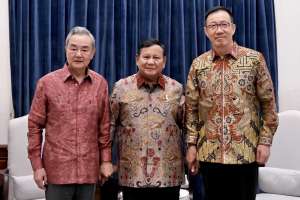
On August 21, 2026, Indonesian President Prabowo met with Foreign Minister Wang Yi and Defense Minister Dong Jun at his residence in Jakarta. Ministry of Foreign Affairs
This visit is a key milestone in the re-establishment and gradual consolidation of the bilateral cooperation mechanism between China and Indonesia under the leadership of Prabowo.
During Joko's tenure, China and Indonesia established a high-level dialogue and cooperation mechanism. After Prabowo took office, the two sides strengthened their mechanisms in the field of political security: last year, the first "2+2" ministerial meeting between foreign ministers and defense ministers was held, and it was decided to establish a comprehensive strategic dialogue mechanism. This year, the second "2+2" meeting was held, and the first comprehensive strategic dialogue was officially launched.
Therefore, China-Indonesia relations are entering a more strategic and institutionalized phase. The so-called "strategization" is reflected in the fact that the topics discussed between the two sides have expanded to include key and cutting-edge issues such as defense security, energy and minerals, and artificial intelligence. The term "institutionalization" refers to the comprehensive strategic dialogue mechanism that coordinates cooperation. The "2+2" framework focuses on political security and defense, with clear divisions of responsibilities. Additionally, the two sides have launched the development of a new five-year action plan for 2027–2031, which enhances the planning and predictability of their cooperation. This also reflects the strategic and institutionalized nature of bilateral relations.
Investment is a key pillar of the current bilateral relationship between China and Indonesia, but it's not the entirety of the relationship. In mid-year, Chinese enterprises reflected on nickel ore quota, tax rates, and regulations, leading to high-level interactions and dialogue between both countries remaining largely unaffected. When Wang Yi met Indonesian Foreign Minister Soeparno at the end of May, Indonesia already indicated its commitment to providing a favorable business environment for Chinese enterprises. In June, the Indonesian Finance Minister, Perumbaya, made a special trip to China to drive the issuance of approximately $1 billion in Panda bonds in mainland China, securing positive support from the Chinese side. This was coupled with further promotion of local currency settlement and financial cooperation. In July, both sides held their tenth round of diplomatic policy dialogue in Beijing, continuing to advance cooperation in areas such as investment, green energy, and advanced technology.
This shows that the relationship between China and Indonesia has a solid foundation and strong resilience, capable of keeping specific economic and trade disputes within the overall framework of bilateral relations.
This comprehensive strategic dialogue further sent positive signals of communication and resolution of differences between the two sides. Indonesia stated that the success of Chinese enterprises is also a success for Indonesia. During his meeting with Wang Yi, Prabowo also mentioned that China has given valuable confidence and support to Indonesia. He welcomed more Chinese enterprises to invest in Indonesia and expressed the intention to continue improving the business environment for Chinese-funded enterprises.
The recent nickel industry policies in Indonesia are influenced by a complex mix of domestic and international factors: these include domestic factors such as fiscal revenue, resource management, and downstream policies. Additionally, they are affected by global nickel prices, capacity expansion, and international industrial competition. Therefore, it cannot be simply understood as being aimed solely at Chinese-funded enterprises. China supports Indonesia in transforming resource advantages into industrialization advantages through downstream strategies, and this fundamental cooperation direction remains unchanged.
Therefore, these frictions are still manageable within the current framework of cooperation between the two countries. It is necessary to continue observing whether this high-level political consensus can be translated into more specific measures by the Indonesian government in areas such as mining quotas, taxes and fees, legal enforcement standards, policy communication, and policy continuity.
China first established a minister-level '2+2' mechanism with Indonesia for two reasons.
Firstly, this mechanism has a clear Indonesian initiative character. The ‘2+2’ model is not a traditional bilateral diplomatic mechanism in China. However, Indonesia has already established similar mechanisms with countries like Japan and Australia. As early as 2023, during the Shangri-La Dialogue in Singapore, Minister of Defense Prabowo publicly stated that establishing a ‘2+2’ mechanism between China and Indonesia was very important, as it would help enhance cooperation in the field of defense security. Subsequently, the two sides progressed from high-level officials meetings to ministerial meetings.
On the other hand, China also has practical needs to elevate the level of political and security cooperation between China and Indonesia. In the past, the major achievements in China-Indonesia relations were focused on trade, investment, and infrastructure. However, as the comprehensive strategic partnership continues to deepen, economic cooperation alone is no longer sufficient to sustain the development of bilateral relations. Indonesia is not only the largest country in ASEAN but also an important member of the Global South, playing a significant role in issues such as the South China Sea, regional security, and relations between major powers. Therefore, China also needs a higher-level platform for regular direct communication with Indonesia on political security, defense, and international and regional situations.
From the perspective of future development, this mechanism has a certain exemplary effect. In April this year, China held its first '2+2' strategic dialogue with Cambodia at the level of foreign ministers and defense chiefs. This shows that China has also begun to use the '2+2' mechanism as an institutional tool to strengthen strategic security communication with some important partners.
Safety and defense cooperation is becoming increasingly important in China-Indonesia relations. During Prabowo's tenure as Minister of Defense, a good foundation for cooperation was already established between the two countries. This trend became even more evident after Prabowo took office as president. The "Peace Eagle" joint training exercises were resumed and expanded; coordination among maritime law enforcement agencies also strengthened. Indonesia has even publicly assessed the possibility of purchasing equipment such as Chinese J-10 fighter jets. This meeting further proposed to strengthen defense industry cooperation, technology transfer, and personnel exchanges. Therefore, safety and defense are becoming increasingly important components of China-Indonesia relations, growing from a relatively weak aspect in past relations.
Indeed, there may be a certain demonstration effect. Indonesia is the largest country in ASEAN, and it has long adhered to a non-partisan foreign policy. Therefore, Indonesia's choices regarding some sensitive geopolitical and security issues often serve as a regional benchmark. The recent naval exercises between Chinese and Indonesian ships in the waters east of Taiwan objectively show that an ASEAN power that maintains strategic independence and maintains close defense cooperation with the United States, Japan, and Australia can also conduct military training with China. This does not necessarily mean a strategic alignment with certain parties, and it may reduce the political concerns of other ASEAN countries regarding expanded defense cooperation with China.
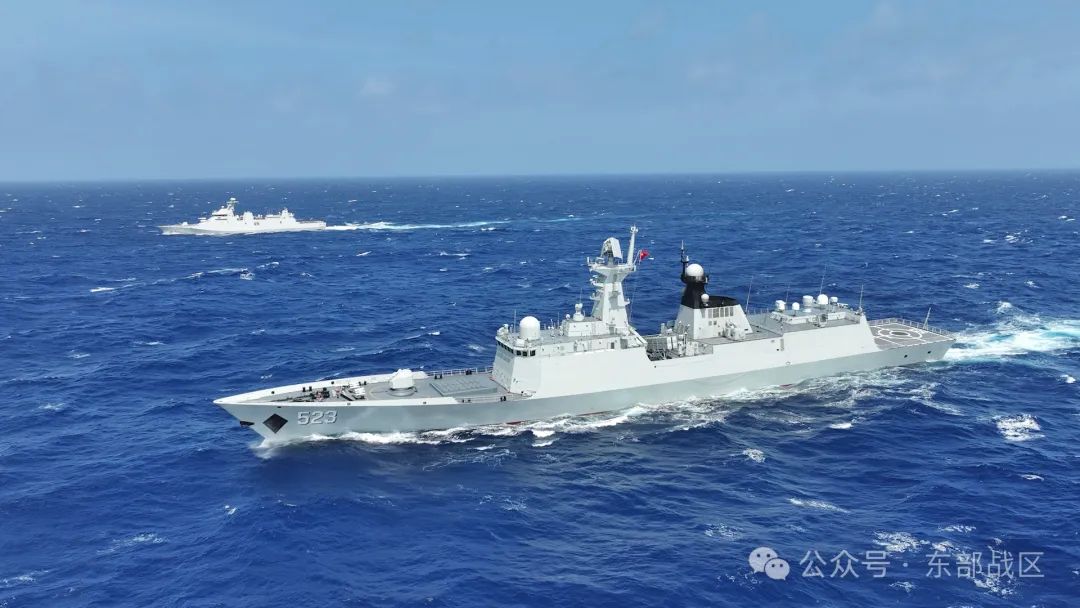
The Honghe ship and the Indonesian "Lei" frigate occupied supply positions and conducted maritime supply drills. WeChat official account of the Eastern Theater Command
This exemplary effect in Indonesia is also evident in other sensitive issues. For example, after Indonesia and China reached an inter-governmental consensus on joint maritime development in 2024, bilateral dialogues regarding maritime issues between China and Malaysia have further intensified, and efforts to promote joint maritime development with Brunei are also ongoing.
It should not be overestimated either, as there are significant differences in the security strategies of ASEAN countries and their perceptions of China’s security. The ideal “demonstration effect” would be one where Indonesia’s actions help some ASEAN countries to adapt their security cooperation with China, expand the space for security defense cooperation among ASEAN countries, and enhance strategic autonomy.
Indonesia's diplomatic choices reflect its long-standing tradition of 'free and active' diplomacy. The core idea is not to seek simple proportional balance among major powers, but to maintain strategic autonomy through diversified partnerships.
On the other hand, Indonesia maintains close security relations with the United States, Japan, and Australia, resulting in a strong pattern of dependency. For a long time, the main combat equipment, personnel training, and military education of the Indonesian military, especially the air force and navy, have been closely connected to those of Western countries. Therefore, even if Indonesia expands its procurement of equipment from non-Western countries, it is impossible to change the existing equipment system, training methods, and logistical support networks in the short term. This determines that security cooperation between Indonesia and Western countries is highly structured and sustainable.
In addition, expanding comprehensive security and defense cooperation with Eastern and Western countries is also a clear policy direction of the Plabojo government. While continuing to deepen defense relations with Western countries, Plabojo actively expands defense relations with emerging powers such as China, India, and Turkey. For example, Indonesia has continuously strengthened maritime security, joint drills, and defense industry cooperation with India. Its relations with Turkey have expanded to areas such as defense industries like drones and fighter jets. Additionally, a “2+2” mechanism has been established between foreign ministers and defense ministers.
From the ASEAN perspective, Indonesia's choice does represent the tendency of a significant number of ASEAN countries to pursue strategic autonomy. However, there are significant differences within ASEAN itself, and the Indonesian model cannot be simply applied to all member countries.
I don’t tend to categorize Indonesia and the Philippines as two completely opposite “models” of dealing with China. In recent years, the Philippines has indeed strengthened its security cooperation with the United States, but this change was also influenced by the policy orientation of the Marcos administration, and it has certain phased characteristics. In the future, as domestic political and external environmental changes occur in the Philippines, there is a possibility that its security policies will be adjusted. Therefore, the policies of ASEAN countries towards China should be seen more as a dynamic spectrum, rather than simply divided into two opposing models.
Indonesia occupies a typical "strategic autonomy" position within this spectrum, striving to expand its strategic maneuverability as much as possible. This is the state that a considerable number of ASEAN countries hope to maintain in the face of major powers' competition. From this perspective, deepening relations between China and Indonesia is generally conducive to regional stability and strategic balance. It shows that regional countries can manage their differences through dialogue mechanisms with China, thereby expanding common interests.
In recent years, the United States has not only strengthened its regional security strategies but also increasingly used economic measures such as tariffs and trade and industrial policies to exert new external pressures on Southeast Asian countries. In this context, the deepening of relations between China and Indonesia indicates that Southeast Asian countries still have room for strategic maneuvering among major powers, and there is also a real possibility of maintaining strategic autonomy. For China, the tightening of relations with Indonesia also highlights that the key to handling relations with ASEAN countries lies in expanding their “non-alignment” space, enlarging cooperation opportunities, and carefully managing sensitive issues through dialogue. Only in this way can a stable regional environment be created that benefits all parties.

