The Central European region has just reached an understanding regarding the trade of hybrid vehicles, and the specific measures that the European side may take are becoming clear.
According to Bloomberg report on October 10th local time, the EU plans to implement trade safeguard measures to reduce the number of hybrid vehicles imported from China by about half. Sources familiar with the matter said that Maroš Šefić, Commissioner for Trade and Economic Affairs of the European Commission, has told EU officials that these measures will reduce China’s exports of hybrid vehicles to the EU to around 400,000 units per year, while the estimated import volume in 2026 is about 800,000 units.
Reports indicate that the EU is considering imposing safeguard measures to restrict certain imports. Such measures can typically take the form of tariff quotas, which allow a certain quantity of goods to be imported at lower rates, with higher tariffs imposed on quantities exceeding the quota.
However, the specific implementation mechanism has not yet been finalized. People familiar with the matter said that Šefić still needs to discuss the arrangements with EU leaders next week. If approved, the measures could come into effect as early as December this year. A spokesman for the European Commission refused to comment on this issue.
This message was released before a second meeting of trade and investment consultations between China and Europe concluded in Beijing.
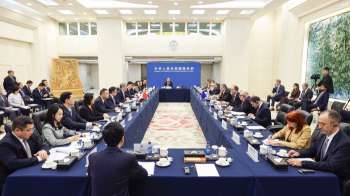
On October 9th, Wang Wentao, Minister of the Ministry of Commerce of China, held talks with Sefovic. Both sides reached a consensus on 16 issues, covering areas such as trade and investment balance, export controls, intellectual property rights, and WTO reforms.
Among them, regarding hybrid vehicle trade, the list published by China states that after intensive consultations, an understanding was reached in accordance with WTO rules, but the specific import volume or implementation mechanism was not disclosed.
After the meeting, Šefić said that the mutual understanding reached by both parties is expected to reduce China's export of hybrid vehicles to the EU by more than half over the next four years, involving millions of vehicles.
It is noteworthy that the target of approximately 400,000 vehicles per year disclosed by Bloomberg, as well as the possible measures to be taken, come from informed sources, and not from the official announcement of the agreement terms by both China and Europe.
On October 10, the head of the European Department of the Ministry of Commerce of China emphasized during the interpretation of the negotiation results that both sides, based on the principles of respecting facts, non-discrimination, and compliance with WTO rules, conducted in-depth discussions on the trade of electric vehicles and hybrid vehicles. This prevented the situation from escalating, effectively safeguarding the actual export interests of Chinese enterprises and ensuring the stable development of Sino-European hybrid vehicle trade.
In recent years, hybrid vehicles in China have seen rapid growth in the European market. According to Reuters data, during the month of September this year alone, the import volume of plug-in hybrid cars in the EU increased by 86%, and the import price decreased by approximately 20%. As European local car manufacturers face competitive pressure, the trade of hybrid vehicles has gradually become a new focus of economic and trade tensions between China and Europe.
According to Bloomberg, Serbian Foreign Minister Đorđe Šefić is expected to report the results of the negotiations to the ambassadors of EU member states on October 11. EU leaders will then discuss further actions at a summit scheduled for next week.
Currently, it remains unclear whether the EU will officially implement safeguard measures, what specific mechanisms will be used, and how these arrangements will be implemented.
Some scholars have pointed out that this consultation between China and Europe not only expressed a willingness to respect each other's concerns and seriously address differences at the macro level, but also achieved some concrete results. Judging from the outcomes, both sides made compromises, including solutions to disputes regarding hybrid vehicles and electric vehicles.