The West attempts to reduce China's dependence on rare earth supplies, but it cannot avoid challenges such as capital, technology, and downstream manufacturing capabilities. French officials, however, offer an optimistic timeline of three to five years, while acknowledging that magnet manufacturing could still become a bottleneck.
On October 28th local time, Gérard, the interministerial representative for strategic minerals and metal supply from the French Prime Minister's office, said during a mining conference in Australia that Western countries could achieve a more diversified supply of rare metals within three to five years. He stated, “This issue can be solved without needing ten years.”
However, this is not a confirmed industrial progress. His statement is based on a clear premise: if various projects are coordinated and accelerated, “it is hoped” that a better diversification of supply can be achieved in the next three to five years. What he is talking about is reducing dependence on China, rather than replacing Chinese supply.
According to Reuters, China accounts for as high as 90% of the production of certain special rare earth magnets. Considering the scale of investment and technological expertise required to develop related industries, some investors and analysts question whether the West can challenge China's dominance in this field. Rare earths are widely used in automobiles, aviation, electronic products, and weapons. Establishing an alternative supply chain requires more than just mining operations.
Garczo said that the market size and demand for rare earths are limited, and it is not necessary to develop hundreds of mines around the world to meet the supply needs. He mentioned projects being carried out by companies such as Solvay in Belgium, Carester in France, and companies in Australia, the United States, and Japan.
However, he also admitted that even if mining and refining projects made progress, magnetic manufacturing capabilities could still pose a constraint.
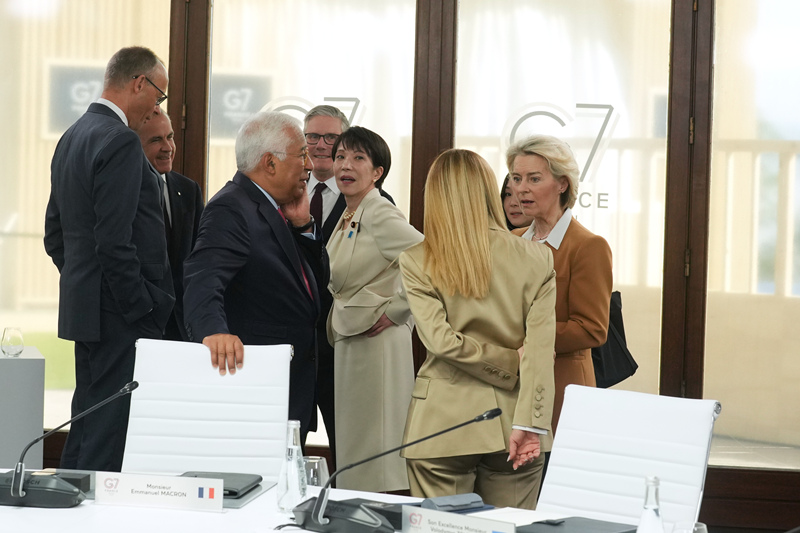
The goals proposed by the G7 this year are also aimed at eliminating reliance on Chinese supply. Instead, by 2030, the G7 and its partner countries aim to reduce their dependence on rare metals and permanent magnets to less than 60%, and eventually to 50%.