"Corrupt New York Times, you are about to close down!" US President Trump has been angered by this American media outlet again.
After the US-Iran ceasefire agreement came into effect, Trump's policy towards Iran has been heavily criticized in American public opinion. The New York Times is one of the leading media outlets to criticize this policy. On June 21st, the newspaper published a long article with a headline that read, "Nearly four months of war have done little to change anything." This article pointed out that this war and the agreement have not really changed the situation in the Middle East. Instead, they have weakened America's own deterrence. It can be said that "the cost was high, but there has been little real change."
The article quotes several analysts saying that neither the war nor the memorandum signed later by both sides has eliminated the “major threat” from Iran. When Trump declared war on February 28th, he described the U.S. military actions as an unprecedented step, claiming that this would reshape the Middle East. Now, more than a hundred days have passed, and the United States and Iran have reached a vague memorandum to end the war. However, many skeptical people are puzzled: what real changes has this conflict brought about?
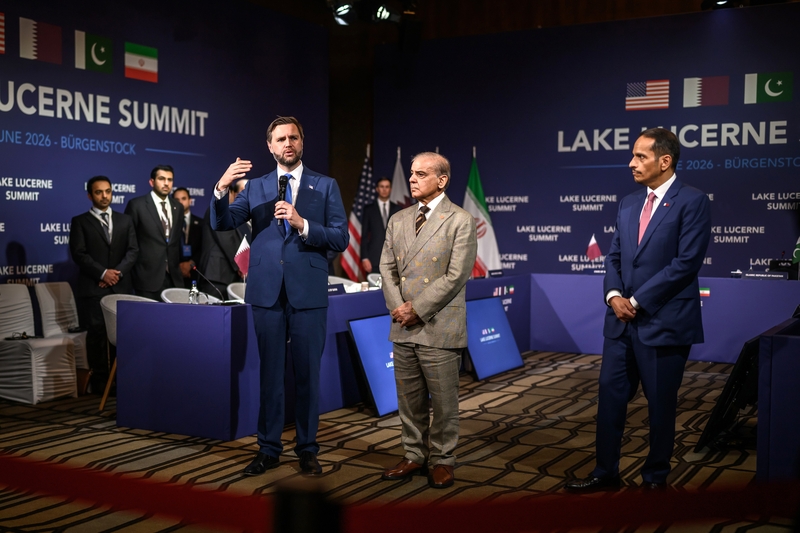
June 21, 2026, in Birsfelden, Switzerland: Delegations from the United States and Iran held negotiations. This was the first round of talks after the signing of a memorandum of understanding between the US and Iran. IC Photo
In the eyes of American officials, Iran represents several major threats, and neither war nor agreements can completely eradicate these threats. Although Iran's nuclear program has suffered significant damage, it has not been completely destroyed. The ultimate resolution to the nuclear issue will be postponed to future negotiations.
The issue of Iran's ballistic missiles is also not addressed in any provisions of the agreement. The Iranian regime continues to exist, with only changes in its leadership; its armed proxies across the Middle East remain a threat. Iran-backed Hezbollah in Lebanon and Israel continue their mutual attacks.
As of Saturday (the 20th), even the most immediate outcome of this agreement—Iran’s reopening of the Strait of Hormuz, which Trump had considered crucial—is at risk. The Iranian military has stated that they will once again block this waterway, arguing that the United States failed to stop the fighting in Lebanon. The US military has refuted this claim, stating that the Strait remains open as per the agreement.
"Professor Katherine Tallmadge, from Massachusetts Institute of Technology (MIT) who specializes in Persian Gulf security issues, stated: "The United States signing this document is not because war proves that the US has overwhelming military advantage. I believe, however, that the memo's birth is only because the US's plate is too full and unwilling to bring conflict to a close."
She stated that avoiding the expansion of hostilities is indeed a reasonable goal, “but it raises questions about what we have actually achieved, especially compared to the initial Iran nuclear agreement.”
Analysts believe that, in comparison, Iran is likely to reap significant economic benefits. This is the only real change, but it may not be in line with American interests.
For Tehran, being able to withstand the fierce attacks from the United States and Israel and demonstrate the ability to counterattack and severely damage the opponent is already a victory in itself. In fact, aside from the Trump administration, it is the core senior officials of the Iranian regime who have been vigorously promoting the achievements of this event.
Iranian Parliament Speaker and chief negotiator Galibf praised Iran's important lessons learned from this war: the country can gain a strategic advantage by controlling the Strait of Hormuz, a shipping route that carries one-fifth of the world's oil transport.
This latent capability has never been activated before, said Gorbachev during an interview with Iran's National Broadcasting Company last week. "However, our enemies have become foolish and have turned our latent advantages into reality."
The memorandum allows ships from various countries to navigate freely for two months, but Tehran has threatened to introduce a fee system for using the new route. This fee system did not exist before the war.
The core of the memorandum is that Iran renounces its revolutionary principle of hostility towards the United States and regional allies, in exchange for substantial and phased economic benefits, including lifting US maritime embargoes, establishing a $300 billion reconstruction fund by Gulf Arab states, unfreezing billions of dollars of frozen Iranian assets, and completely lifting US sanctions against Iran.
The US Vice President Williams told reporters on the 18th that the grand goal of this agreement is to completely reverse Iran's hostile relations with the United States and most Middle Eastern countries since the revolution in 1979.
"People say that Iran will never change its way of doing things. Maybe it's not true, if it is true then they won't get any economic benefits from the agreement," Hans said, "But why don't we try?"
However, experts in the Middle East region express skepticism about this.
Stockholm International Peace Research Institute Director Karima Hassan stated that Middle Eastern conflicts typically only spawn more extreme ideologies, rather than mitigating them. "The reality is that after these conflicts, the overall security environment in the region will significantly deteriorate."
This article clearly angered Trump, who immediately posted on ‘Truth Social’ to attack The New York Times.
"Corrupt New York Times, you are about to collapse. What are you still writing in the headlines? 'The war has lasted nearly four months, what changes have occurred? Analysts say there aren't many changes.'"
Really?! Their army is already on the verge of collapse, with no navy or air force left; all launch sites, missiles, drones, and related production lines have been destroyed; even the top two levels of leadership are gone. Inflation has skyrocketed to 250%, and the economy is completely ruined. Soldiers can’t receive their pay. The Strait of Hormuz is now open, and oil is flowing freely. Both the US stock market and employment rates have reached record highs!
"This is the change that's happened, you corrupt and immoral incompetent scum, there are even more things happening!!!" Trump said.
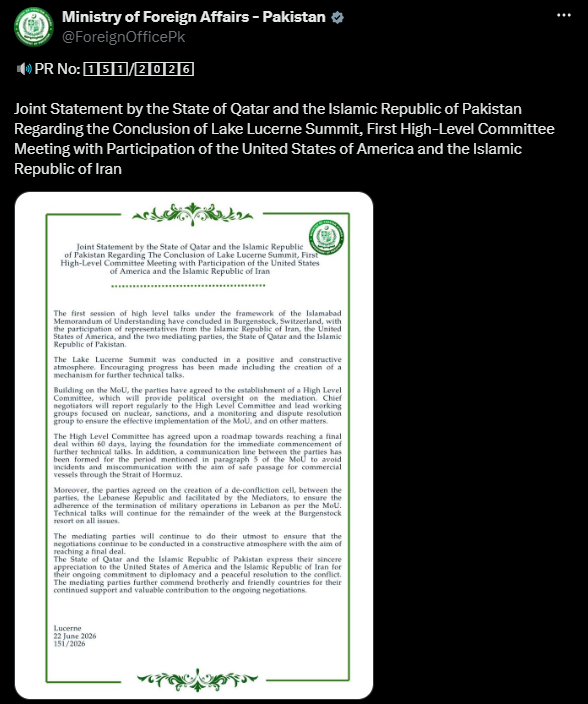
Here is an analysis from The New York Times regarding the impact of the US-Iran memo on various parties.
Wanse said that this agreement retains America’s leverage in balancing Iran, allowing the United States to adjust economic benefits given to Iran as easily as turning on and off a faucet. However, many experts are skeptical about this.
Indeed, Trump broke the long-standing political taboo of not invading Iran in the United States. However, analysts say that his actions have exhausted the most powerful deterrent tool that Washington has had since the Islamic Revolution in Iran: the deterrence of military force. The United States used this card, but failed to achieve its intended goals. Iran will surely remember this lesson well.
According to Talmage of MIT, during the first round of conflicts that lasted 12 days last June, the US military used long-range bombers to destroy several Iranian nuclear facilities, which briefly shook the possibility of the long-term survival of Iran's nuclear program.
But she added that, in recent times, this war had the opposite effect, because Trump chose not to further escalate the conflict. “To a certain extent, the United States has weakened its leverage of pressure on itself." Tarmalqi said.
Meanwhile, Iran's attack on a US military base in the Middle East caused extensive damage, breaking the perceived inviolability of US military bases and further weakening America's deterrence.
The memorandum also included a clause: Some of the U.S. forces must withdraw from the areas around Iran within 30 days.
Former U.S. Ambassador to the Middle East Robert Ford questioned, "When did we actually start discussing future U.S. military deployments with Iran?"
War has dealt Iran with severe losses, with reports indicating that 1,700 civilians have died. Iran’s former supreme leader, Khamenei, along with dozens of senior military commanders, were killed. Iran’s defense system has revealed significant flaws. Repairing military and industrial infrastructure will cost hundreds of billions of dollars. Domestic inflation is soaring, and high unemployment rates could spark public protests.
However, Avshalom Osvall, author of the book 'Ambition Wars: The Game between America, Iran and the Middle East', states that Iran's resilient resistance during the war has actually reshaped Iran's own perception of its own security.
Analysts point out that Iran's attempt to exchange its hostile stance towards the United States and its allies for economic prosperity is a huge gamble. After all, historically, Iran has almost always chosen the path of confrontation.
Israel was convinced at the beginning of the war that this war could completely eliminate Iran’s ability to pose a threat for at least one generation.
However, the reality is that during the negotiations, the ally United States marginalized Israel. The agreement reached ignored all of Israel’s demands and further restricted Israel’s freedom to carry out military strikes in Lebanon. Trump also publicly belittled Israeli Prime Minister Netanyahu several times. With elections approaching and the situation being sensitive, this has revealed a rare rift between the United States and Israel.
In Israel's view, this memorandum can be considered a disaster.
Retired Israeli intelligence officer Danny Sitelnikov, who specializes in Iranian affairs, stated: "Our entire strategy regarding Iran has completely collapsed."
Analysts believe that Lebanon is the weakest link in this memorandum.
Hezbollah has successively dragged Lebanon into two devastating wars. First, it involved Hamas in fighting in Gaza, and later it was involved in conflicts due to Israel's attacks on Iran. This has alienated a large number of Shia grassroots supporters. Data from Lebanese health institutions shows that years of violence have resulted in the death of tens of thousands of people, with nearly 4,000 civilians killed this year alone.
Iran has cut funding for reconstruction efforts, further deepening public dissatisfaction. However, analysts say that the Iranian Islamic Revolutionary Guard is working hard to restore Hezbollah's combat capabilities. The funds promised for reconstruction in Tehran may flow towards this militia force, which gives Hezbollah the motivation to abide by the agreement.
Both Trump and Vance acknowledge that small-scale conflicts in Lebanon are unlikely to disappear completely, but the US has not specified what level of violence would trigger a major military intervention.
The six Gulf countries hoped to stay out of Israel’s long-term confrontation with Iran, but they couldn’t fulfill their wish. Iran has blocked the Strait and attacked oil and gas facilities in various countries, plunging the Gulf countries into economic turmoil.
Despite the US military's interception of weapons that averted the most severe losses, this war forced Gulf countries to re-examine their dependence on American security guarantees.
Currently, all parties are talking about building a “golden bridge” to Iran: establishing mutual interests through joint investments.
Kuwait University historian Bader Saeed said: "We can achieve mutual benefit and deep integration of interests, making the cost of renewed wars incredibly high. Just imagine, if there were factories invested by Iran inside Kuwait, they would definitely think twice before resorting to violence, wouldn't they?"
Overall, it is widely believed that this memorandum of understanding has brought little or no substantial change.
Washington Strategic and International Studies Center's Middle East analyst Paul Salem said bluntly, "The United States has now lost its most important bargaining chip. I suspect that it will be difficult to make substantive progress on the nuclear issue. In a sense, this long and bloody war has only led to a hollow agreement."